Pterygium (Surfer's Eye)
Pterygium is an abnormal growth of the conjunctiva (the clear membrane over the white part of the eye) that extends onto the cornea (the clear front part of the eye). It typically appears as a triangular, wing-shaped growth. It most commonly starts from the inner corner of the eye (near the nose) and is more prevalent in tropical climates compared to colder regions.
Causes
Dust, wind, sunlight, and ultraviolet (UV) radiation are the primary causes. Frequent exposure leads to dryness and degeneration of the ocular surface, resulting in a yellowish, raised growth called a Pinguecula.
This growth prevents tears from coating the cornea evenly. The part of the cornea adjacent to the pinguecula becomes dry and inflamed, eventually leading to the growth of tissue and blood vessels that gradually develop into a Pterygium.
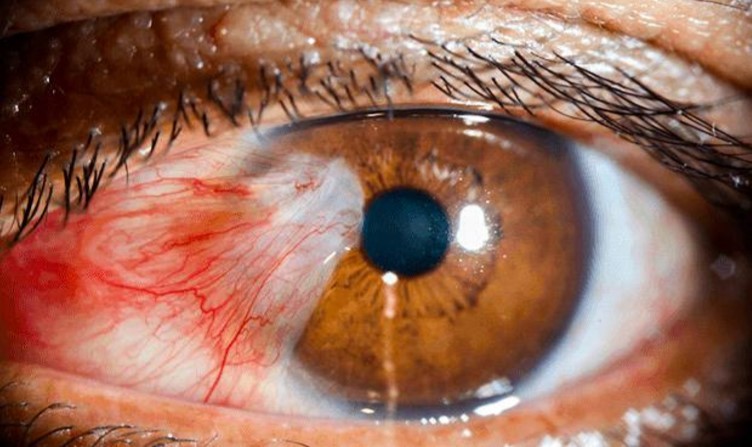
Symptoms
- Eye irritation and burning sensations when exposed to wind, sunlight, or smoke.
- Blurred vision; a pterygium can pull on the cornea causing astigmatism. If left untreated, it can grow over the center of the pupil, causing vision loss.
- Pain, redness, and tearing during inflammation.
- Restricted eye movement or double vision due to the growth pulling on the eye tissue.
- Cosmetic concerns due to the visible growth on the cornea.
Treatment
- Artificial tears to prevent the cornea and conjunctiva from drying out.
- Vasoconstrictors and anti-itch drops in cases of redness and itching.
- Mild steroids may be prescribed for short-term use during inflammation. These should only be used under the supervision of an ophthalmologist to avoid steroid-related complications; never self-medicate with eye drops.
- Wearing UV-protective sunglasses and wind protection when outdoors, especially for field workers or welders.
- Surgery is considered in the following cases:
- Frequent inflammation.
- The growth progresses and causes vision impairment.
- The growth is very thick and raised.
- Double vision occurs during eye movement.
- Cosmetic concerns or loss of confidence.
Surgical Procedures
- Standard Pterygium Excision: This method has a high recurrence rate of 40-50%, especially in younger patients.
- Excision with Conjunctival Autograft: This is the most effective method to prevent recurrence. It involves removing the pterygium and grafting healthy conjunctival tissue from another part of the same eye. In cases where healthy tissue is unavailable, specially prepared amniotic membrane may be used as a graft.
The surgery is a minor procedure performed under local anesthesia. It is painless and takes approximately 30 minutes. If the growth is present on both sides of the eye, it may take 40-50 minutes. Patients are required to follow up with their doctor as scheduled.
Prevention
To prevent a pterygium from forming or to stop it from worsening:
- Avoid direct sunlight by wearing UV-filtering sunglasses.
- Wear a hat or use an umbrella when outdoors in bright sunlight.
- Avoid frequent exposure to strong winds.
- Protect the eyes from regular exposure to dust, chemicals, or volatile vapors.
Related Packages