Before It Becomes Cancer
From Small Polyps to Colorectal Cancer
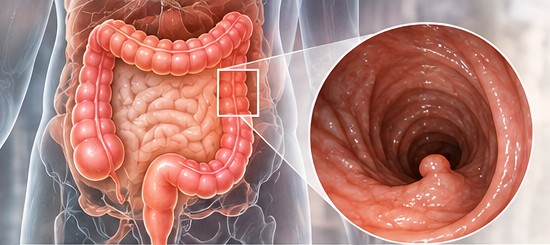
When people hear the word "cancer," they often assume it develops suddenly. However, for most cases of colorectal cancer, the story begins many years earlier—starting from subtle changes in normal mucosal cells that slowly grow into certain types of polyps before eventually progressing into cancer over time.
Key Takeaways
An adenoma is not yet cancer, and most polyps never turn into cancer at all. However, certain polyps can gradually accumulate cellular abnormalities until they become malignant. This is precisely why "early detection and removal of polyps" is so crucial in preventing cancer altogether.
The Progression: Normal Mucosa → Polyp → Cancer

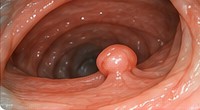
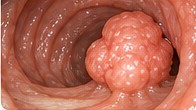
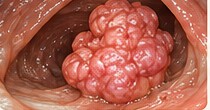
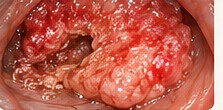
This process is medically known as the Adenoma-Carcinoma Sequence. In many cases, it takes roughly 10 to 15 years for a precancerous polyp to fully transform into invasive cancer.
Why Polyps Are the Window of Opportunity to Stop Cancer
The lining of our colon constantly regenerates new cells. When a group of cells begins to grow abnormally, a polyp may develop. There are several types of polyps, and they do not all carry the same risk. However, adenomas receive special attention from physicians because they are considered true precancerous lesions.
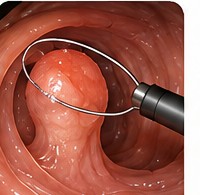
A Colonoscopy Does More Than Just "Find Cancer"
- If a polyp is found, the physician can often remove it immediately during the colonoscopy.
- Removing polyps eliminates the pathway before high-risk growths ever get the chance to become cancerous.
- This makes colorectal cancer screening unique compared to many other health checks: it doesn't just catch cancer early—it actually prevents cancer from developing.
Does Every Polyp Turn into Cancer?
No, not at all. Many polyps never turn into cancer. The actual risk depends on several factors, including size, quantity, cellular structure, and the specific histological type of the polyp. When polyps are discovered and removed during a colonoscopy, your physician will evaluate the pathology report and customize an appropriate surveillance timeline for you.
What Everyone Should Keep in Mind
"Finding an adenoma" does not mean you have cancer. It simply means we found an early lesion that should be removed before it has the opportunity to progress further.
Why Screen If You Have No Symptoms?
Because early-stage colorectal cancer and most polyps rarely cause noticeable symptoms. Waiting for visible signs—such as rectal bleeding, unexplained weight loss, or chronic abdominal pain—often means missing the crucial window when treatment and prevention are easiest.
At What Age Should Screening Begin?
This is a frequent point of confusion because international guidelines and Thailand's national screening initiatives use slightly different age criteria.
| Guideline / Program | Starting Age | Notes |
|---|---|---|
| International Guidelines (e.g., ACS / USPSTF) | Age 45 | Recommended for average-risk individuals, continuing routine screening up to age 75. |
| Thailand National Screening Program | Age 50–70 | The National Cancer Institute primarily utilizes the Fecal Immunochemical Test (FIT) for the target population, repeated according to program intervals. |
Should You Start at 45 or 50?
From the perspective of international medical consensus, average-risk individuals should begin discussing colorectal cancer screening starting at age 45. However, under Thailand’s public health screening framework, the subsidized target demographic is ages 50 to 70. Being between 45 and 49 years old does not mean you shouldn't get screened; it simply means your access pathways, insurance coverage, or healthcare entitlements may vary.
Who Might Need to Start Screening Earlier?
- A first-degree relative (parent, sibling, or child) diagnosed with colorectal cancer, particularly at a young age.
- A personal medical history of adenomatous polyps or previous colorectal cancer.
- Chronic inflammatory bowel disease (IBD), such as ulcerative colitis or Crohn’s disease affecting the colon.
- Inherited genetic syndromes that raise risk, such as Lynch syndrome or Familial Adenomatous Polyposis (FAP).
For individuals in these higher-risk groups, the starting age and screening frequency differ significantly from the general public. A personalized screening plan should always be guided by your physician based on your personal and family medical history.
How Is Screening Done? The 2 Main Methods You Should Know
1. FIT (Fecal Immunochemical Test) - Stool Blood Screening
- A non-invasive test performed on a stool sample—no camera or scope required.
- Ideal for convenient, non-invasive initial screening repeated at regular intervals.
- USPSTF recommends an annual FIT; in Thailand's national program, those with negative results are typically re-screened every 2 years.
- Note: A positive result requires a follow-up colonoscopy to find the cause; it does not automatically mean you have cancer.
2. Colonoscopy - Direct Endoscopic Examination
- Allows direct visualization of the entire colon lining and immediate removal of polyps in a single session.
- For average-risk individuals with normal results, USPSTF guidelines recommend repeating every 10 years.
- Requires bowel preparation (cleansing) and is typically performed under conscious sedation or general anesthesia for comfort.
- If polyps are identified and removed, the next surveillance interval may be shorter than 10 years, depending on pathology results and the number of polyps.
Other screening alternatives exist, such as stool DNA-FIT, CT colonography (virtual colonoscopy), and flexible sigmoidoscopy. However, for most individuals, FIT and Colonoscopy are the two primary modalities you should be familiar with. The choice depends on your personal risk level, lifestyle convenience, and healthcare access.
Warning Signs: Do Not Wait for the Screening Age
- Blood in the stool or visible rectal bleeding.
- A persistent change in bowel habits, such as chronic constipation or unexplained diarrhea.
- Unexplained iron deficiency anemia.
- Unintentional weight loss, persistent abdominal cramps, or chronic bloating.

Summary
Most colorectal cancers do not happen overnight. We often have a window of many years to detect and remove polyps before they ever have the chance to become cancerous. Colorectal screening is therefore not simply about "catching cancer early"—it is a real, proactive opportunity to stop cancer before it even starts.