Solutions for Nearsightedness, Farsightedness, and Astigmatism
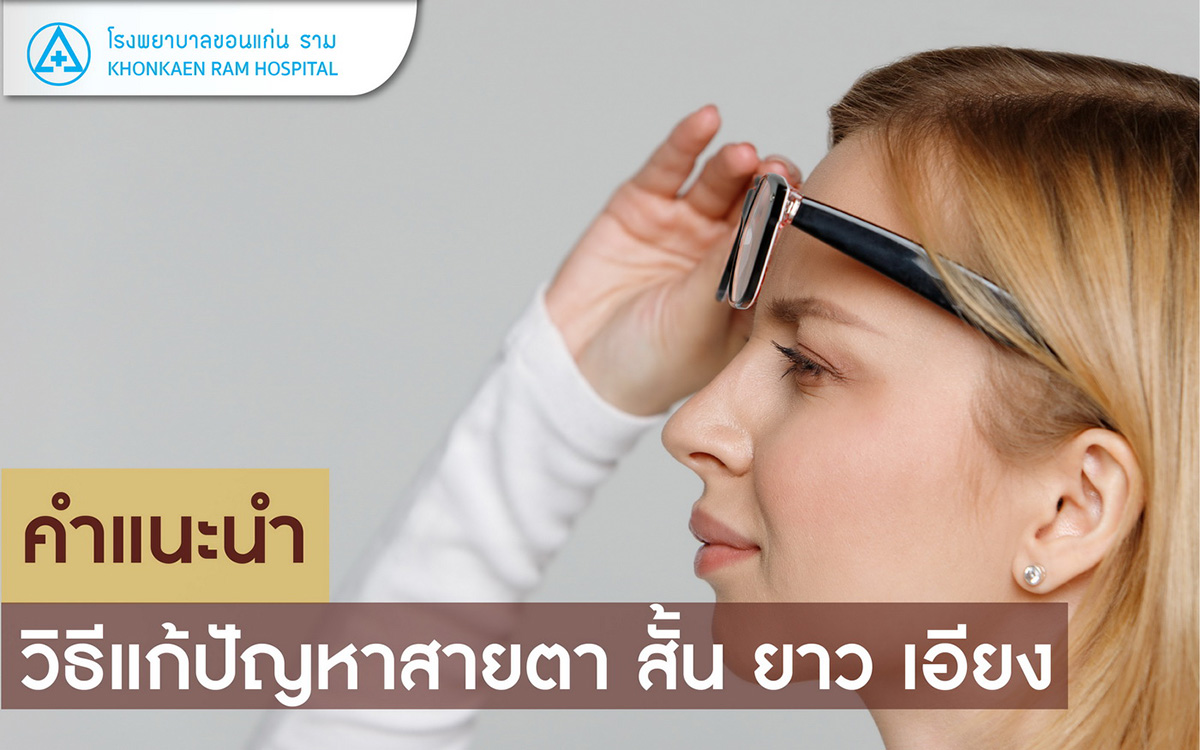
There are 4 types of Refractive Errors:
- Nearsightedness (Myopia): Caused by the cornea having too much curvature (Refractive myopia) or the eyeball being too long (Axial myopia). This causes light to focus in front of the retina, resulting in blurry distant vision.
- Farsightedness (Hyperopia): Caused by the cornea having too little curvature (Refractive hyperopia) or the eyeball being too short (Axial hyperopia). This causes light to focus behind the retina, resulting in blurry vision for both near and distant objects.
- Astigmatism: Caused by an irregular corneal curvature shaped like a rugby ball rather than a sphere. This creates multiple focal points, leading to distorted or blurred vision.
- Presbyopia (Age-related Farsightedness): Caused by the natural lens losing its elasticity or hardening with age. The less flexible lens makes it difficult to focus clearly on near objects.
How to Correct Nearsightedness, Farsightedness, and Astigmatism
- Eyeglasses: A long-standing solution, but they come with limitations such as inconvenience during sports and unnatural image magnification or reduction.
- Contact Lenses: These resolve many issues associated with glasses but require strict hygiene and carry a higher risk of allergies, inflammation, and infection.
Laser Vision Correction Methods:
- PRK (Photorefractive Keratectomy): The surface of the cornea (epithelium) is removed before using a laser to reshape the cornea. Disadvantages include longer recovery time, significant irritation, slower visual recovery, prolonged use of eye drops, and the need to avoid direct sunlight to prevent corneal haze.
- LASIK: There are 2 main sub-types:
- Femto-LASIK (Flap-based): A popular modern innovation that uses no blades. A Femtosecond laser creates a thin corneal flap, and an Excimer laser reshapes the cornea. It offers high safety, precision, and sharp visual results.
- ReLEx SMILE (Flapless): The latest innovation from Carl Zeiss Meditec, Germany, for correcting nearsightedness and astigmatism. It uses only a Femtosecond laser without creating a flap or using an Excimer laser. Benefits include higher corneal structural integrity, reduced dry eye symptoms, less nighttime glare, faster healing, and less irritation compared to other methods.
- Implantable Collamer Lens (ICL): A surgical option for those with very high nearsightedness or astigmatism who are not suitable candidates for LASIK. An ophthalmologist calculates and implants a corrective lens in the optimal position within the eye.

Call us