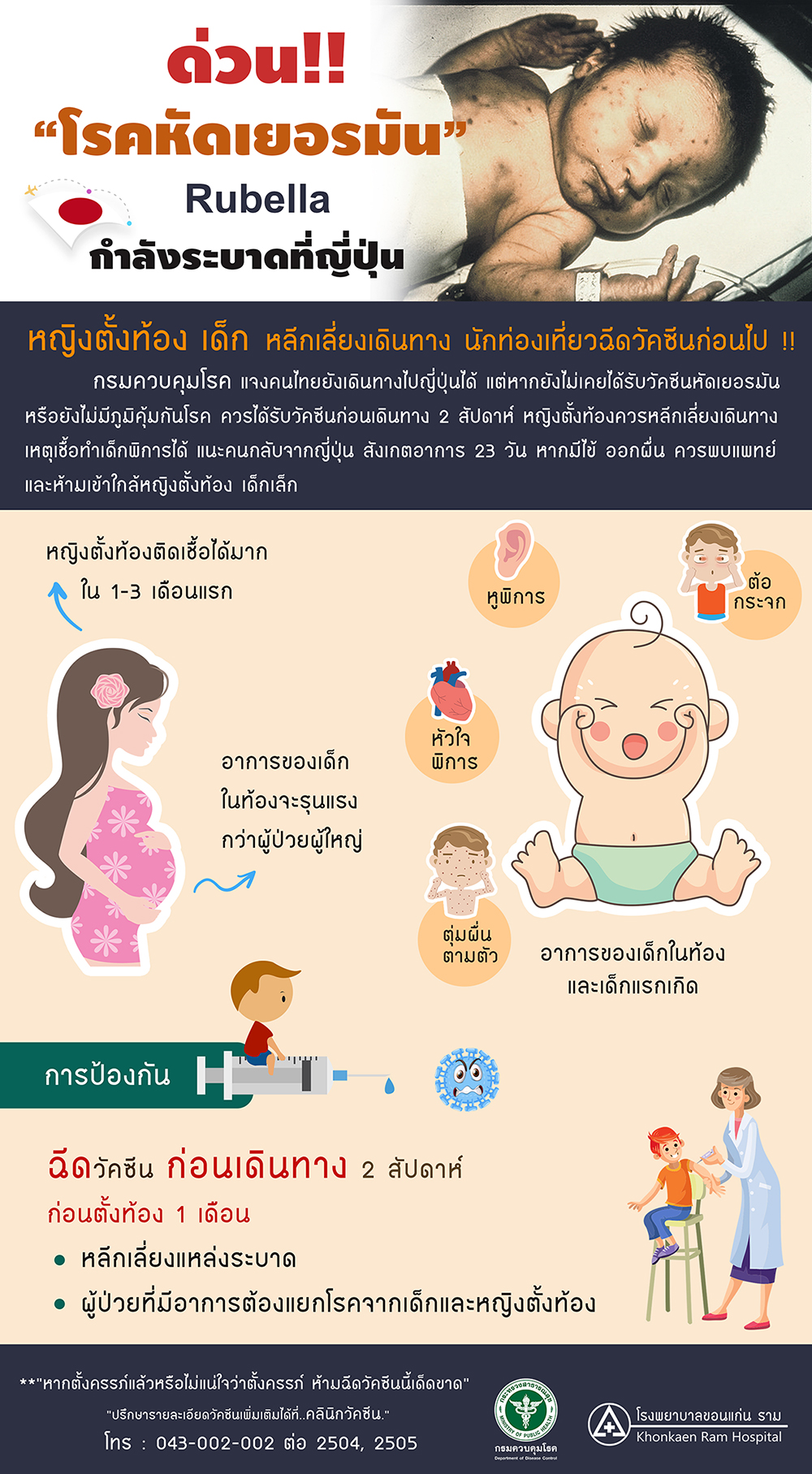
Rubella (German Measles)
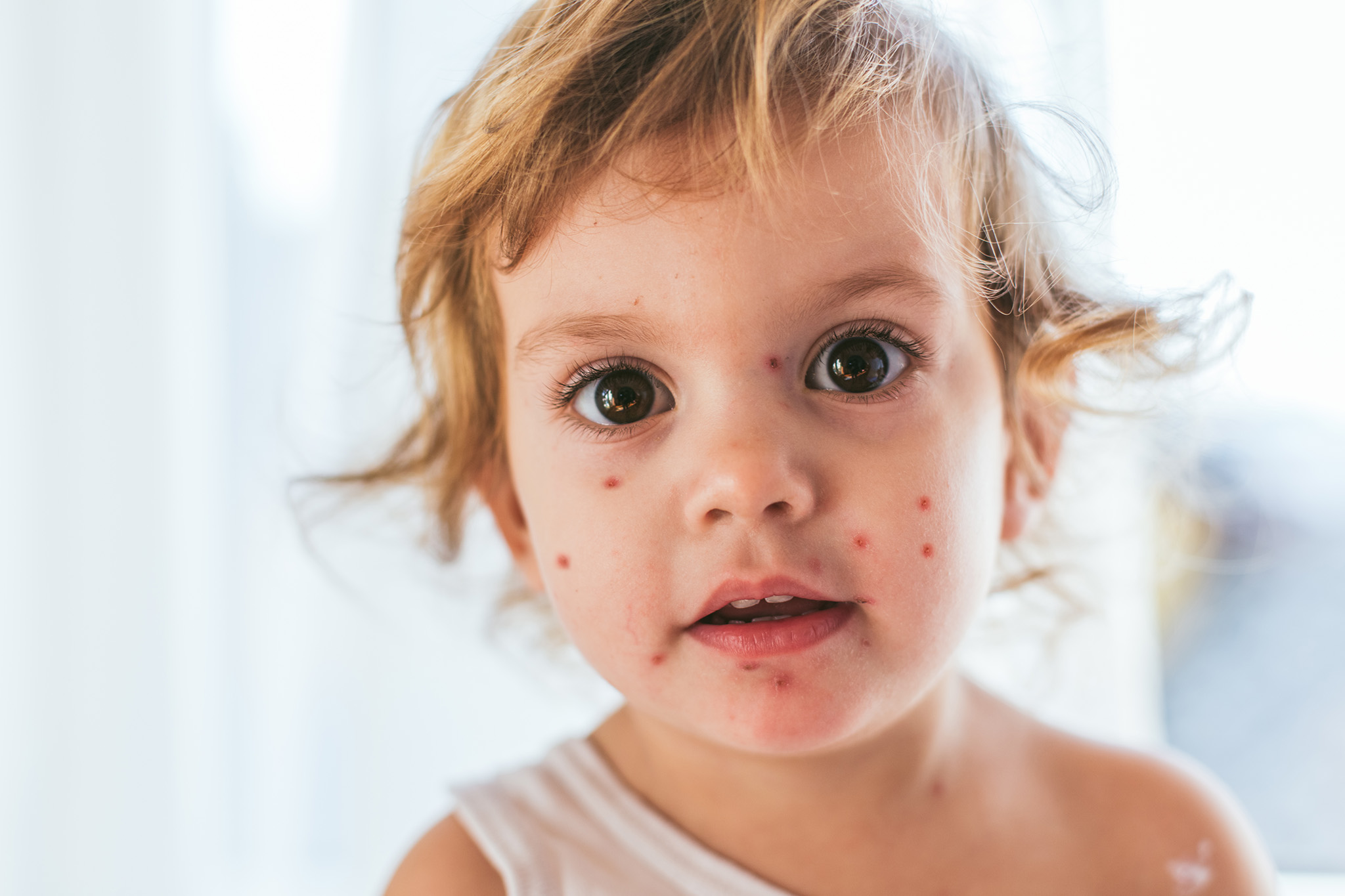
Rubella, also known as German Measles, is a major cause of fever and rashes. It affects both children and adults, with symptoms ranging from asymptomatic to severe or even fatal.
Causes
It is caused by the Rubella virus, transmitted through direct contact or exposure to respiratory droplets from an infected person. An infected individual can spread the virus from 7 days before the rash appears until 7 days after. Crucially, the virus can also be transmitted from a pregnant mother to her unborn child.
Epidemiology
Incidence of Rubella has significantly decreased in the United States following the introduction of the MMR (Measles-Mumps-Rubella) vaccine. However, it remains a significant public health issue in Africa, the Middle East, South Asia, and Southeast Asia.
In Thailand, recent data from the Bureau of Epidemiology (Department of Disease Control) indicates that Rubella continues to affect adults, particularly in the 15–44 age range, emphasizing the importance of immunity even after childhood.
Symptoms
The incubation period ranges from 12–23 days (averaging 14 days). Approximately 25–50% of infected individuals show no symptoms. For those who do, symptoms include fever, red eyes (conjunctivitis), sore throat, runny nose, fatigue, a rash starting on the face and spreading to the body, and swollen lymph nodes. The rash typically resolves in 3–5 days, while lymph node swelling may last 5–8 days.
Complications
Common complications include joint pain and arthritis, occurring in up to 70% of infected women. Rarer but severe complications include thrombocytopenia (low platelet count) and encephalitis (brain inflammation).
"Most critically, if a pregnant woman is infected, especially during the first trimester, it can result in Congenital Rubella Syndrome (CRS), leading to cataracts, deafness, heart defects, or miscarriage."
Diagnosis
Diagnosis is based on exposure history and clinical symptoms, confirmed by blood tests or laboratory analysis of throat or nasal secretions.
Treatment
There is currently no specific antiviral treatment for Rubella. Care is focused on supportive treatment to manage symptoms.
Isolation and Observation
Patients should be isolated for 7 days after the onset of the rash. Those who have been in contact with a patient or traveled to an outbreak area should monitor themselves for 23 days. If fever and a rash develop, consult a doctor immediately.
Prevention
Rubella is highly preventable through the MMR vaccine. Non-immune adults should receive at least one dose, as the vaccine is 97% effective. Note: The MMR vaccine is contraindicated for pregnant women or individuals with severe immunosuppression.