Q: What causes tonsillitis?
A: The tonsils are glands located on the sides of the inner throat. Their function is to trap germs from the age of 4 until about 10 years old, after which their function gradually decreases.
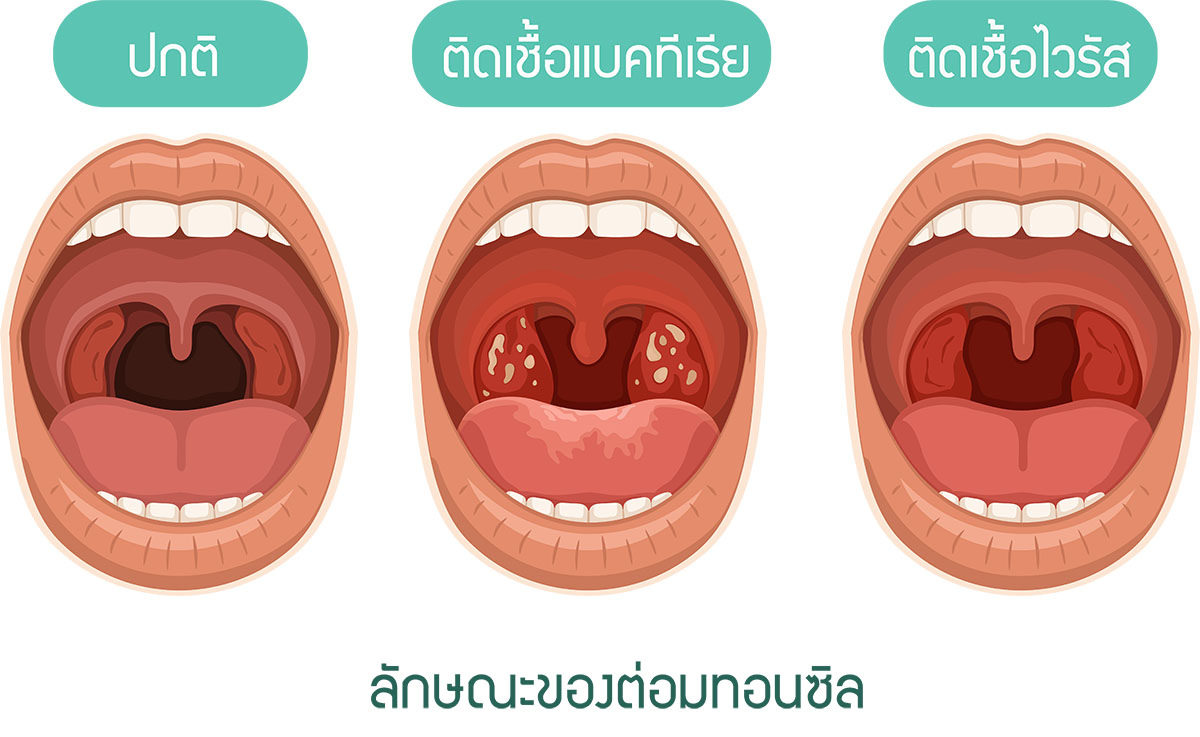
Inflammation of the tonsils is caused by viral or bacterial infections, or by food debris getting trapped in the tonsil crypts, which is also known as a tonsil stone (tonsillolith).
Q: In which age group does tonsillitis usually occur, and what are the symptoms?
A: It can occur from childhood to adulthood. In children, enlarged tonsils can obstruct the airway, causing loud snoring during sleep, pauses in breathing (apnea), and waking up startled. After waking, they may not feel refreshed. Often, the adenoids are enlarged as well; the adenoids are located behind the nasal cavity and slightly above the tonsils.
In adults, enlarged tonsils can also obstruct the airway. Another indication is having a sore throat frequently, more than 6 times a year, or about 3 times a year for two consecutive years. This is considered chronic tonsillitis.
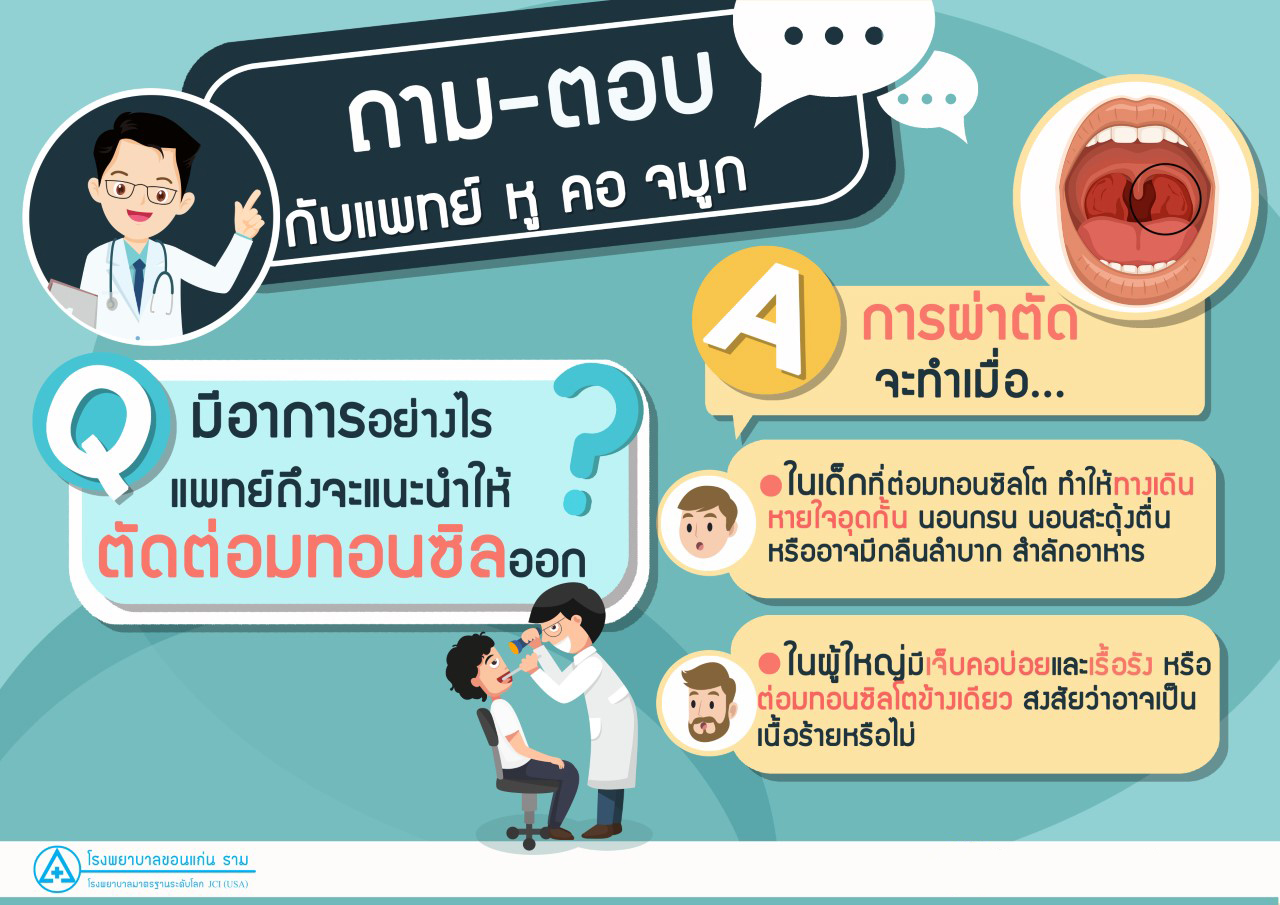
Q: Why, or under what symptoms, would a doctor recommend a tonsillectomy?
A: Surgery is performed when there is an indication of airway obstruction.
- In children with enlarged tonsils and adenoids that cause airway obstruction during sleep, leading to startled awakenings, or possibly difficulty swallowing and choking on food.
- In adults, indications include frequent and chronic sore throats, or unilateral (one-sided) tonsil enlargement, which raises suspicion of malignancy and requires surgery for a biopsy.
Q: Do some people need to have their adenoids removed as well?
A: The adenoids trap germs from birth until about 4 years of age, after which the tonsils take over this function. After age 4, the adenoids usually begin to shrink on their own. However, in some individuals, they do not shrink, and when the tonsils are enlarged, the adenoids are often enlarged as well. Therefore, in children, surgery to remove the tonsils (tonsillectomy) often includes the removal of the adenoids (adenoidectomy).

Q: How long does the surgery take?
A: The doctor will administer general anesthesia, then remove the tonsils through the mouth. There is no external incision. The surgery takes approximately **30–40 minutes**.
Q: What can I eat after the surgery?
A: On the first day after surgery, you can have **cold, liquid foods** right away, such as ice cream or yogurt. On the second or third day, you can start eating soft foods like porridge or congee. Follow this diet for about **two weeks**. Once the wound has healed completely, you can return to your normal diet.
Q: Are there any complications after a tonsillectomy that I should be aware of?
A: Complications that can occur include bleeding, which can happen in two ways:
- **Immediate bleeding** within the first 1–2 days.
- **Delayed bleeding** 5–7 days after the surgery. This is usually caused by the surgical wound becoming infected and inflamed, which causes the cauterized spot on the wound to detach, leading to bleeding. It can also occur if someone eats hard or large pieces of food, like fried pork, which can scrape the surgical wound and cause it to bleed.
Q: If a child has their tonsils—which are germ-trapping glands—removed, will it make their body weaker or more prone to illness?
A: In addition to the adenoids and tonsils (we have two pairs of tonsils: the ones on the sides of the throat and another pair at the base of the tongue), a child's immune system also includes lymph nodes in the neck and white blood cells. There are many lines of defense. Therefore, the removal of the tonsils and adenoids **does not reduce immunity**.
Notes
- Hospital stay: **2 days / 1 night**
- The price includes doctor's fees, service fees, room charges, meals, and take-home medication.
- The price **does not include** pre-treatment evaluation costs and follow-up examination costs.
- **General anesthesia** will be used for the procedure.
- In case of complications, the hospital will charge the actual cost incurred.
- Prices are valid from January 1 to December 31, 2026.
- The hospital reserves the right to change prices without prior notice.
For More Information
- Ear, Nose, and Throat (ENT) Clinic, G Floor, Building 2, Tel. 043 002 002 ext. 1310
- Health Information Center, ext. 1905