Preventing and Treating Hand Eczema from Frequent Washing

The most common irritants in alcohol-based hand gels are the alcohol itself and the added fragrances. The severity of the allergic reaction often depends on the frequency and duration of exposure.
If you experience an allergic reaction or irritation from hand gel, follow these steps:
- Prioritize Soap and Water: Wash your hands with mild soap whenever a sink is available.
- Limit Gel Use: Use alcohol gel only when traveling or when soap is unavailable. Wash your hands with soap as soon as you find a sink.
- Moisturize Immediately: Apply a hand cream after washing to prevent the skin from drying and cracking. If you have sensitive skin, choose a fragrance-free hand cream.
Common Issue: Excessive washing with soap or alcohol can strip away natural oils, leading to dry skin, peeling, cracked wounds, and even nail lifting (Onycholysis).
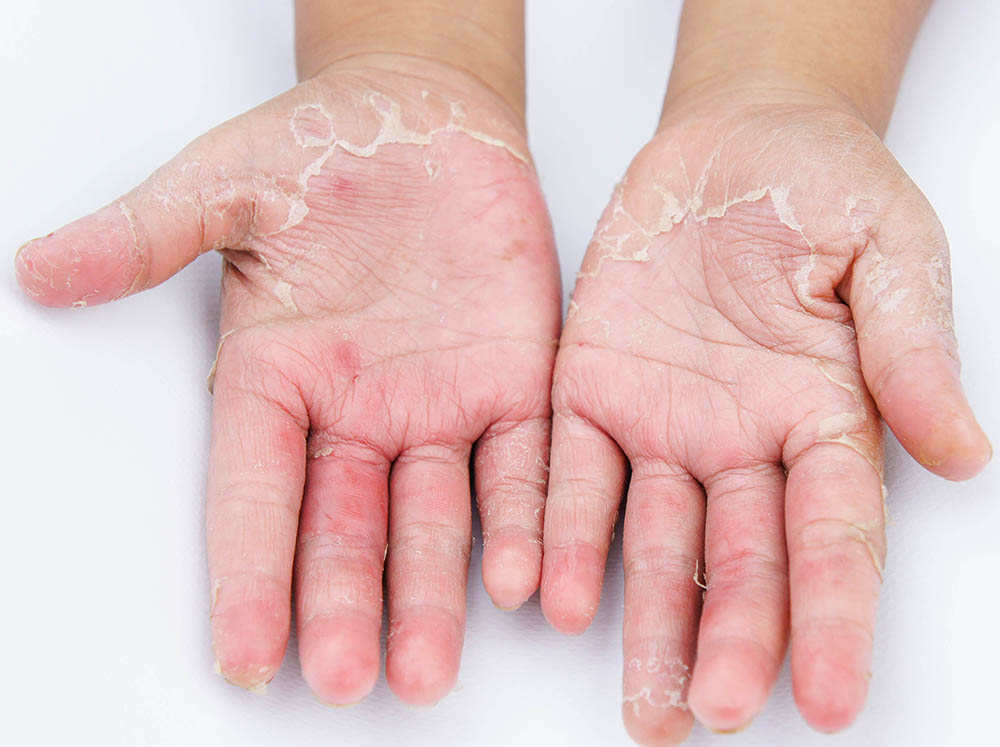
This happens because frequent cleaning washes away the protective water and lipid barrier of the skin. When the skin cells lose hydration, they become brittle, crack, and form painful lesions.
Don't forget to carry hand cream and apply it every time after washing your hands. Protecting yourself from germs shouldn't come at the cost of your skin health!
If you notice pustules (pus-filled bumps) developing on top of red rashes, it may indicate a secondary infection. If your condition becomes chronic or doesn't improve, please consult a dermatologist for an accurate diagnosis and treatment plan.