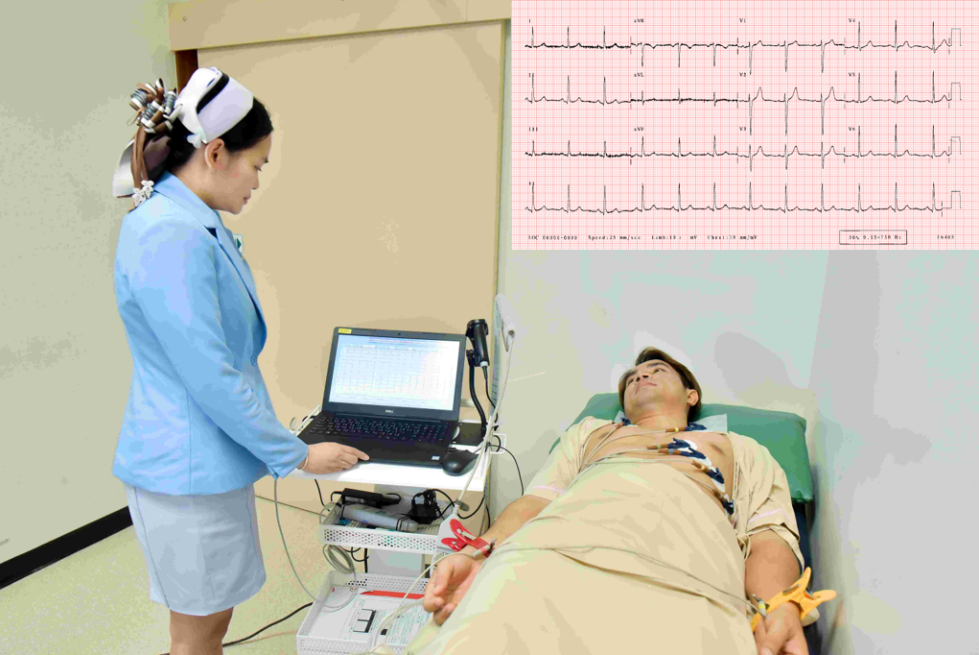
Electrocardiogram (EKG or ECG)
An Electrocardiogram is a test that records the electrical activity of your heart. It tracks the electrical signals generated by the heart muscle through electrodes (sensors) placed on the skin, displaying the results as a graph. Specialized physicians use these patterns to diagnose heart health and identify potential issues.
EKG is a simple, convenient, and painless procedure. It requires no special preparation and can detect a wide range of cardiac abnormalities.
Who Should Get an EKG?
- To screen for Ischemic Heart Disease (insufficient blood flow to the heart).
- To detect structural abnormalities, such as enlarged or thickened heart muscles.
- To identify electrical disturbances caused by electrolyte imbalances (e.g., abnormal levels of potassium or calcium).
- To monitor side effects from certain medications that may affect heart rhythm.
- As part of a General Heart Health Check-up.
EKG Procedure Steps
- The patient lies flat on an examination bed while a technician places small electrodes on the chest, arms, and legs.
- The machine records the heart's electrical signals for approximately 5–10 minutes. The patient simply needs to lie still and breathe normally.
Price: 400 THB *
*Price includes equipment and doctor's fee.*Excludes hospital service fees.


Related Packages
Call us