Nasopharyngoscopy (Nasal Endoscopy)
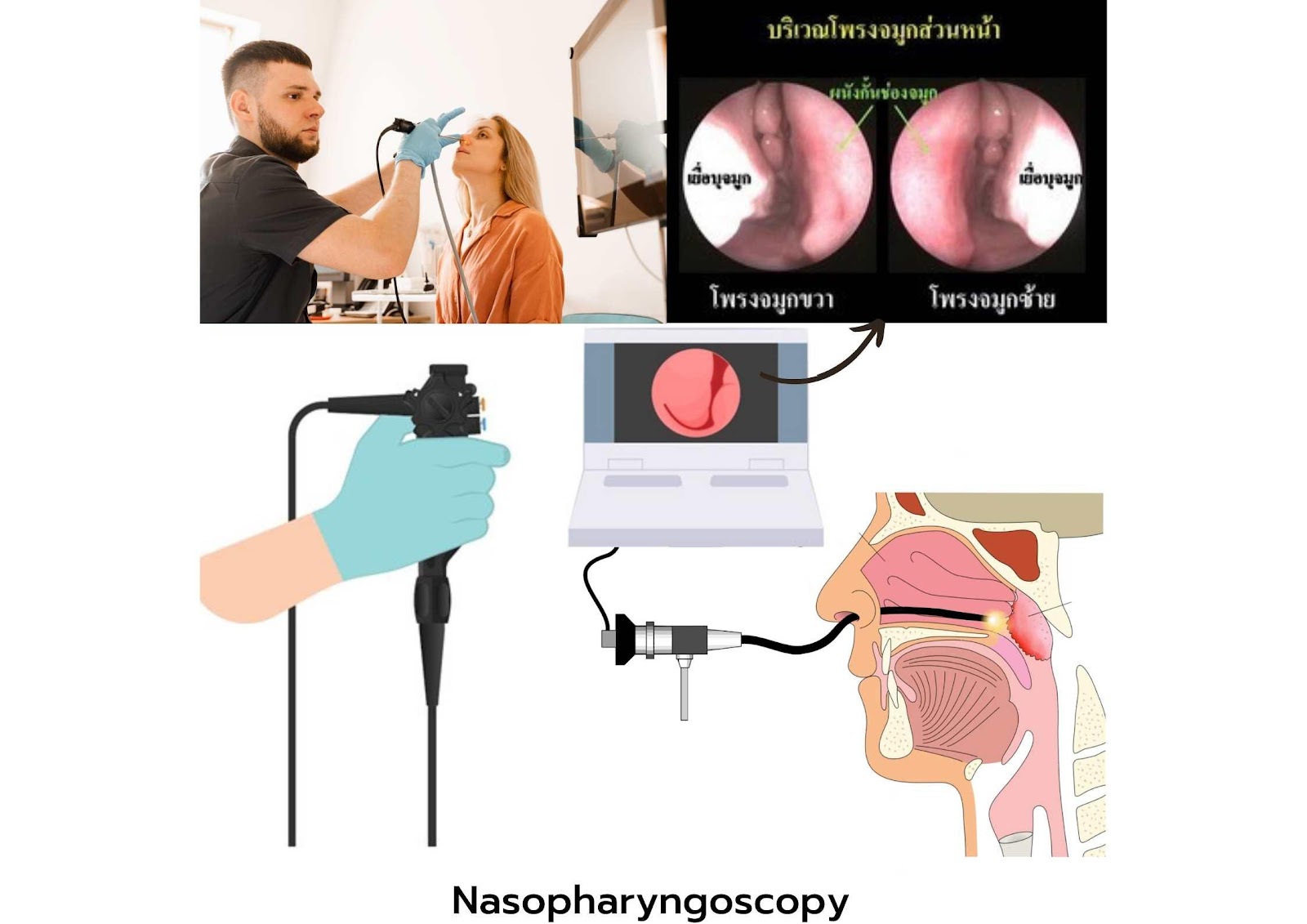
Nasopharyngoscopy, also known as Nasal Endoscopy or Rhinoscopy, is a diagnostic procedure where a specialized video camera is used to examine the nasal passages and throat, with results displayed on a monitor. By inserting a thin, flexible tube (endoscope) into the nostrils, the physician can directly visualize the mucous membranes, the nasopharyngeal area, and any abnormalities within the nasal cavity. Patients are also able to view the live images on the monitor alongside the doctor.
Symptoms and Conditions Requiring Nasal Endoscopy
- Sinusitis
- Nasal tumors or nasopharyngeal cancer
- Persistent nasal congestion or stuffiness
- Frequent nosebleeds (Epistaxis)
- Foreign objects stuck in the nose
- Sore throat, hoarseness, or chronic cough
The Procedure
- No fasting is required; you do not need to avoid food or water before the test.
- The examination is typically performed while you are sitting in a standard chair.
- The physician will spray a local anesthetic mixed with a decongestant into the nostrils to reduce swelling and numb the area before inserting the scope.
- If the physician identifies suspicious tissue, a biopsy (taking a small tissue sample) may be performed for further pathological analysis.


Related Packages
Call us