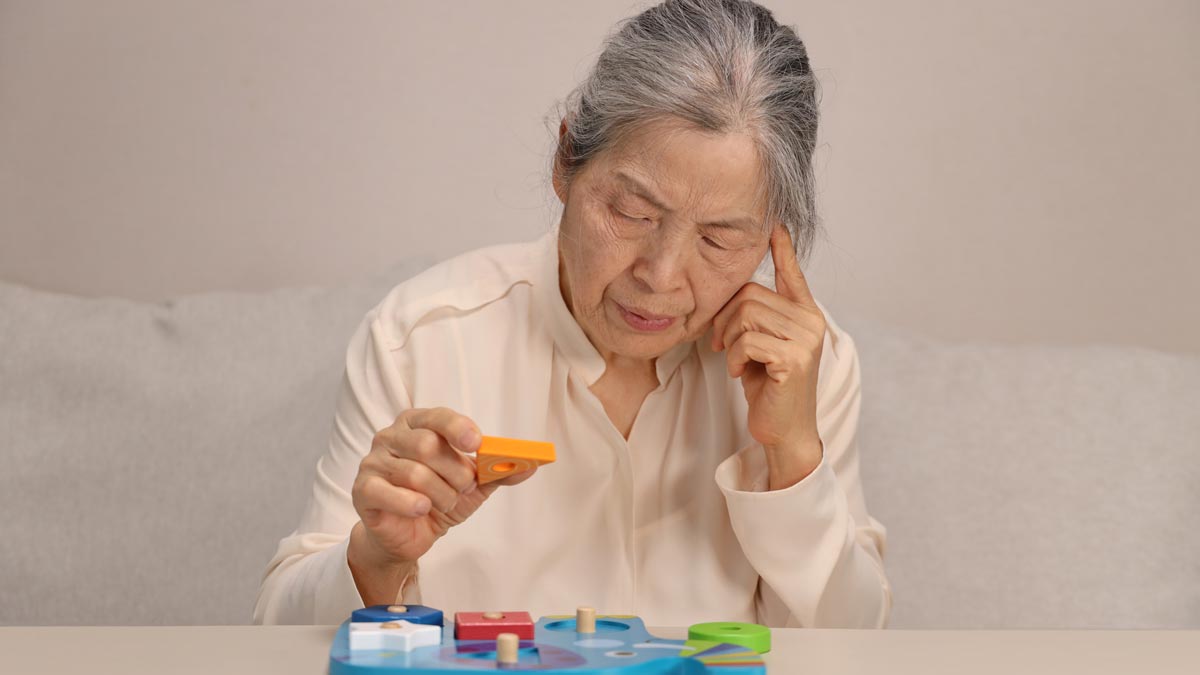
Alzheimer’s Disease: The Leading Cause of Dementia
For individuals aged 60 and older, the chance of developing Alzheimer’s is 1 in 16. For those aged 80 and older, that ratio increases significantly to 1 in 6.
Alzheimer's is the most common cause of dementia. It stems from abnormalities in brain tissue structure caused by the accumulation of a protein called Amyloid-Beta. This results in the degeneration of brain cells, loss of cognitive function, and impaired memory, eventually leading to behavioral changes and difficulties in daily living. Secondary causes include cerebrovascular disease (stroke), along with factors such as genetics, environment, pollution, and stress.
Symptoms
Alzheimer’s has an incubation period of 10–15 years before symptoms manifest. During this time, patients show no symptoms and can function normally. By the time symptoms appear, significant brain tissue has already been lost, making brain restoration very difficult.
3 Methods to Detect Alzheimer’s Before Symptoms Appear
- PET Scan (Positron Emission Tomography): A nuclear medicine imaging technology. It is relatively expensive and the process takes 2–3 days.
- Cerebrospinal Fluid (CSF) Analysis: Measures the levels of Alzheimer’s-related proteins through a lumbar puncture.
- Blood Test (OAB Test): A new method that detects the clustering of proteins (Oligomerized Amyloid Beta: OAB). Since Alzheimer’s starts with the accumulation of Amyloid-Beta 20–30 years before dementia sets in, this test is vital.
The OAB test helps assess the risk of Alzheimer’s in its earliest stages, allowing for early detection and intervention. The test has an accuracy rate of 86–88%, with results typically available within 30 days.
Blood Test Result Interpretation
Low Risk (< 0.9)
- Low risk for cognitive and memory impairment.
- If no cognitive decline is observed, a re-test is recommended every 24–36 months.
Intermediate Risk (0.9 - 1.0)
- Moderate risk for cognitive and memory impairment.
- A re-test should be performed every 12–18 months, alongside managing underlying health conditions and lifestyle modifications.
High Risk (> 1.0)
- High risk for cognitive and memory impairment.
- A detailed consultation with a dementia specialist is recommended, along with strict lifestyle changes.
- A re-test should be performed every 6–12 months.
Additional Recommendations
- Screening is recommended for individuals aged 40 and older.
- A "High Risk" result is not a definitive diagnosis of Alzheimer’s Disease.
- High-risk results may be influenced by poorly controlled underlying conditions such as hypertension, diabetes, obesity, sleep disorders, stress, alcohol consumption, or smoking.
- If brain function remains normal, medical treatment or medication may not yet be necessary.
The most important prevention for dementia is early detection.
Dementia and Alzheimer's disease are currently incurable. The best approach is to prevent the onset or delay the progression of the disease for as long as possible.
Although Amyloid-beta begins to accumulate even before symptoms appear and we cannot entirely stop its buildup, early detection and intervention can significantly reduce damage to brain cells.
Detecting the pathology of Alzheimer's in advance allows us to take care of ourselves and prevent dementia symptoms before they manifest through **Lifestyle Modification**. The better you maintain healthy habits and daily routines, the lower your chances of developing dementia.
5 Guidelines to Prevent Dementia
1. Regular Exercise: Exercise at least 3 times per week, for no less than 10 minutes at a time, totaling 150 minutes per week (or 75 minutes if performing high-intensity exercise).
2. Brain Activities: Challenge your brain by reading newspapers, journaling, learning a new language, or using brain-training applications.
3. Dietary Control: Consume healthy foods such as poultry, fish, and whole grains. Reduce intake of high-carbohydrate foods and red meat.
4. Cardiovascular Disease Management: Regularly monitor and control blood pressure, blood sugar levels, and cholesterol levels.
5. Socializing: Participate in social activities, such as group sports, talking on the phone, or joining religious activities. This helps strengthen brain resilience.
By taking good care of yourself and reducing these supplementary risk factors, you can potentially reduce the chance of developing dementia by up to 40%.
Summary of Benefits: Alzheimer's Blood Screening
- Can detect risks 10–15 years before symptoms appear.
- High accuracy rate of 86–88%.
- Helps in health planning to prevent and delay brain degeneration.