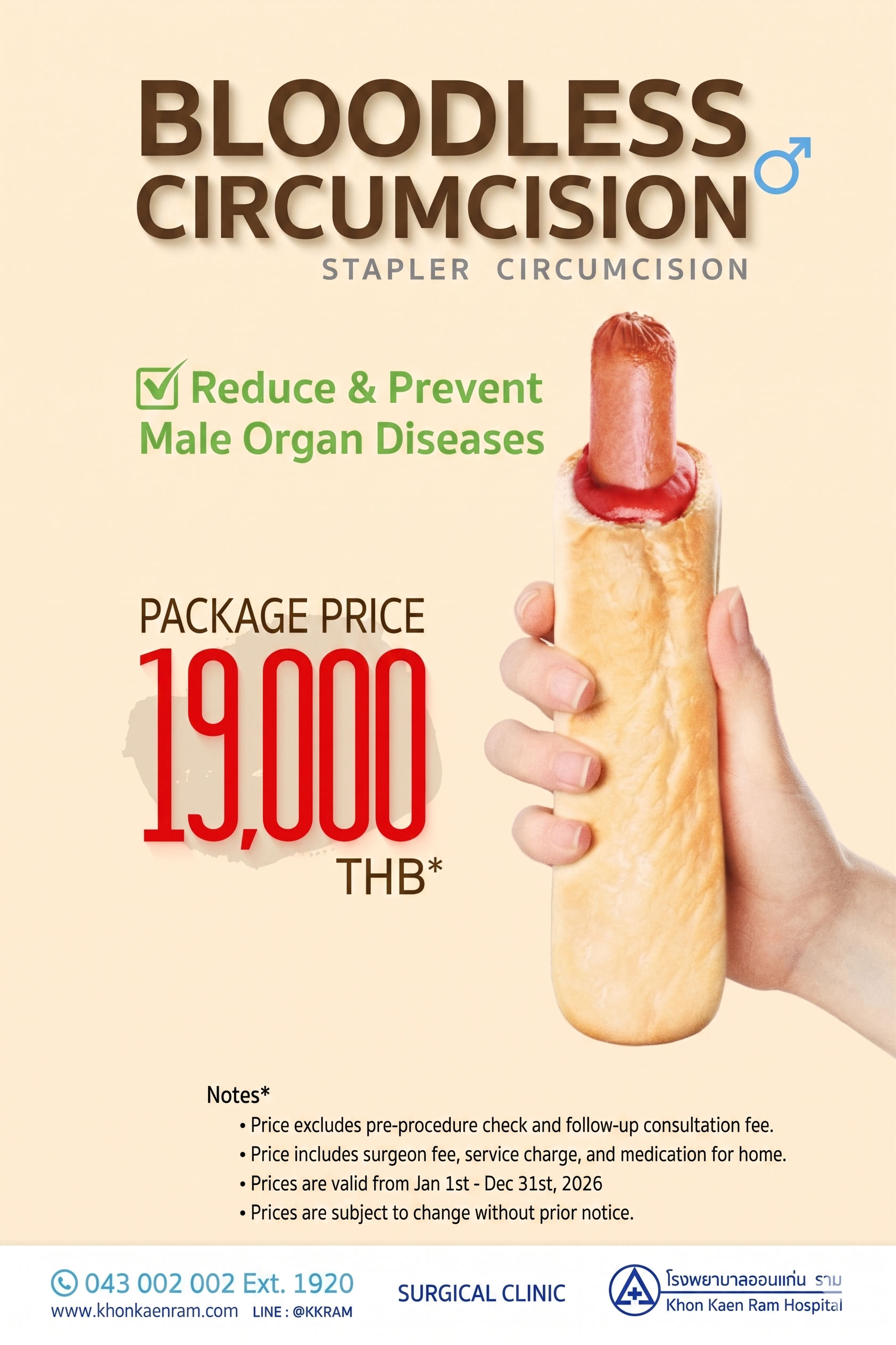
Male Prepuce Circumcision (Circumcision)
Circumcision makes it easier to maintain penile hygiene, as this skin often accumulates dead skin cells, known as smegma. If not cleaned properly, this can lead to buildup and cause inflammation of the penile tip, or in some cases, a secondary infection.
Circumcision can be performed at any age, from newborns to adults, or for those with religious indications (e.g., Islam) and those with medical indications, such as an unretractable or tight foreskin (phimosis), a foreskin that constricts the penis causing swelling and pain (paraphimosis), difficulty urinating, ballooning of the foreskin during urination, or those with warts, tumors, sores, and foreskin inflammation, etc.
Why should every man be circumcised?
- Easier to maintain cleanliness.
- Prevents the condition of a constricted or tight foreskin (phimosis).
- Reduces the risk of diseases such as penile cancer, penile tip inflammation, urinary tract infections, and sexually transmitted diseases (STDs).
- Reduces the transmission of STDs and the infection responsible for cervical cancer.
Circumcision Methods
1. Traditional Circumcision
The doctor injects a local anesthetic, then uses standard surgical instruments—scissors or a scalpel—along with an electrocautery device to remove the foreskin, followed by suturing. This takes **30 minutes to 1 hour**, which can cause more pain due to the longer duration and requires a longer recovery time.
2. Stapler Circumcision (Sutureless/Bloodless)
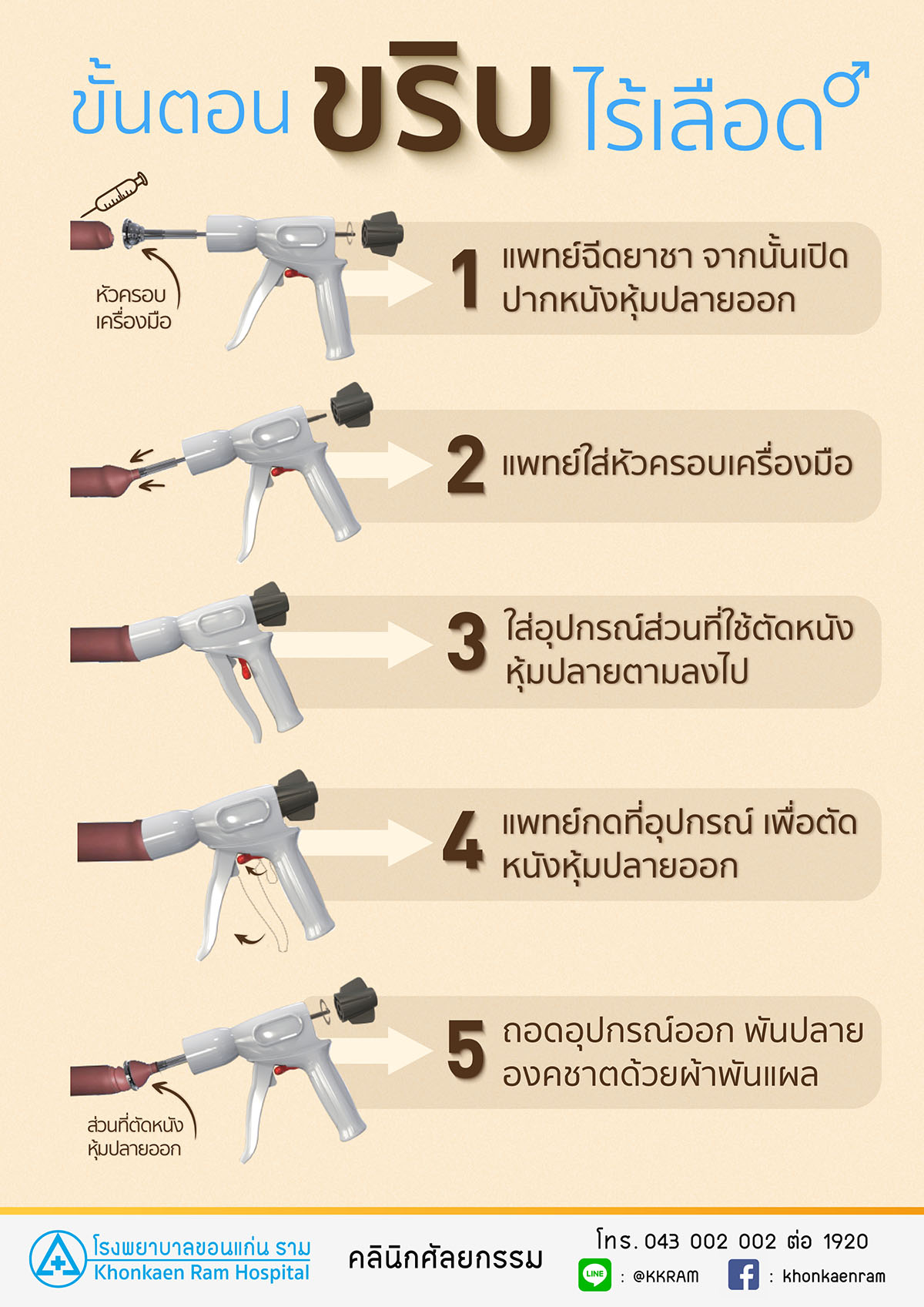
This is a new, simpler, highly safe, and standardized modern circumcision technique. The specialist doctor injects a local anesthetic into the penis (subcutaneous injection), then uses a **Disposable Circular Stapler**, which performs the cutting, suturing, and hemostasis (stopping bleeding) simultaneously.
This surgical method is superior to the traditional one because it has a **faster operating time (15–20 minutes)**, fewer complicated steps, minimal blood loss, a neat and aesthetically pleasing surgical margin, significantly reduced pain, and easy wound care, allowing patients to recover quickly within **one week**.
Preparation
- No need to fast (no need to withhold food or water).
- Maintain hygiene of the genital area.
- Inform the doctor of any chronic illnesses, history of drug allergies, and medications you regularly use.
- Wear comfortable, loose-fitting pants.
Post-Bloodless Circumcision Care
- Do not let the wound get wet during the first **3 days**. If the wound gets wet, dry it immediately.
- **Abstain from sexual activity** and avoid activities that put pressure on the penis, such as cycling, for the first **1–2 months**.
- If any abnormal symptoms occur, such as pus or bleeding, difficulty urinating, or increased swelling of the wound, you should return to see a doctor immediately.
Notes
- This is the price for **outpatients** (Ambulatory patients).
- The price **includes** doctor's fees, service fees, and take-home medication.
- The price **does not include** pre-treatment evaluation costs and follow-up examination costs.
- **Local anesthesia** will be used for the procedure.
- In case of complications, the hospital will charge the actual cost incurred.
- Prices are valid from January 1 to December 31, 2026.
- The hospital reserves the right to change prices without prior notice.
For More Information
- Surgery Clinic, G Floor, Building 1, Tel. 043 002 002 ext. 1920
- Health Information Service Center, ext. 1905