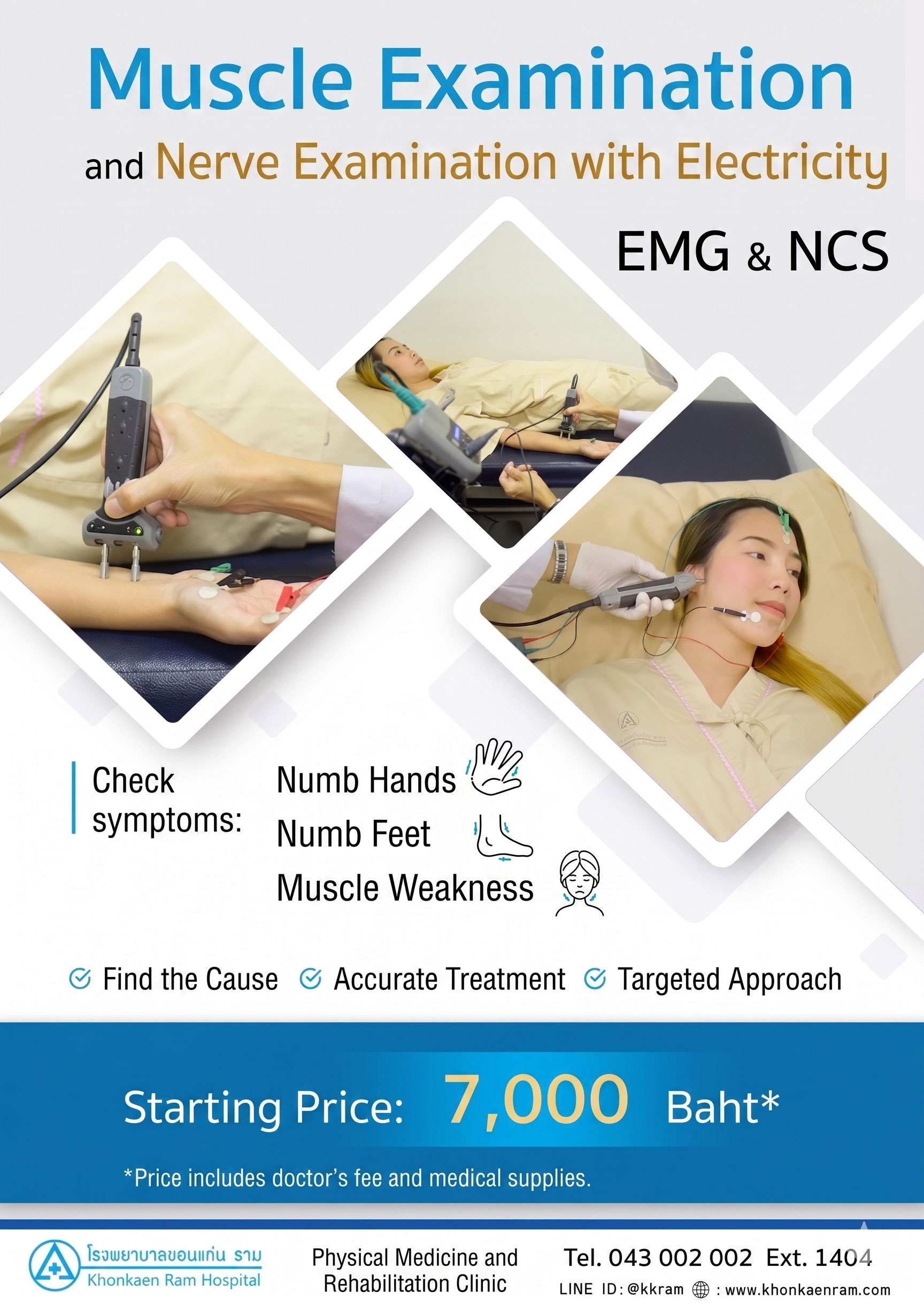
Electromyography (EMG) and Nerve Conduction Study (NCS)
This involves measuring the electrical signals in the nerves and muscles to diagnose neurological and muscular symptoms such as **numbness** in the hands or feet and **muscle weakness**, ensuring correct and precise treatment.
Recommended Conditions for Testing
- **Carpal tunnel syndrome (CTS)**, which causes numbness in the hand due to nerve compression in the wrist.
- **Nerve injuries** from accidents, leading to muscle weakness (Nerve injury, Brachial plexus injury).
- **Peripheral nerve inflammation** causing hand and foot numbness (Polyneuropathy, GBS, CIDP).
- **Herniated disc compressing a nerve root** (Radiculopathy).
- **Muscle diseases** such as muscle inflammation, muscle atrophy, and myasthenia gravis (MG).
- **Inflammation of the 7th cranial nerve** or facial paralysis (Bell’s palsy).
- **Degenerative diseases** of the cervical or lumbar spine.
- Diseases of the spinal cord's anterior horn cell, such as **ALS**.
- Diseases of the nerves in the **neck and back**.
- **Congenital nerve disorders**.
- And other neurological and muscular diseases.
Testing Method
The electrodiagnostic testing method is divided into two parts:
1. Nerve Conduction Study (NCS): This test involves applying safe, mild electrical currents to stimulate the nerve pathways that the doctor suspects may be abnormal. The doctor will then analyze the resulting graphs on the screen to diagnose nerve abnormalities.
2. Needle Electromyography (EMG): The doctor will use a small needle electrode to detect abnormal signals within the muscle, helping to pinpoint the exact location of the lesion. The doctor will then combine the information from both tests to make a diagnosis and recommend the appropriate, targeted treatment.

Preparation
- No need to fast (food and water are not restricted).
- Inform the doctor if you have a pacemaker, as well as any underlying medical conditions and medications you are taking, such as blood thinners or medication for Myasthenia Gravis.
- Refrain from wearing any jewelry for ease of using the equipment.
Self-Care After the Test
You can go home after the test; there are no lasting side effects. You may experience minor soreness at the needle sites. You can take a pain reliever or rest as needed. If you notice any abnormal symptoms such as swelling or redness, please return to see a doctor.
Note
- Price includes the doctor's procedure fee and medical supplies.
- Price does not include pre-procedure assessment and take-home medication.
- Prices are valid from January 1 to December 31, 2026.
- The hospital reserves the right to change prices without prior notice.