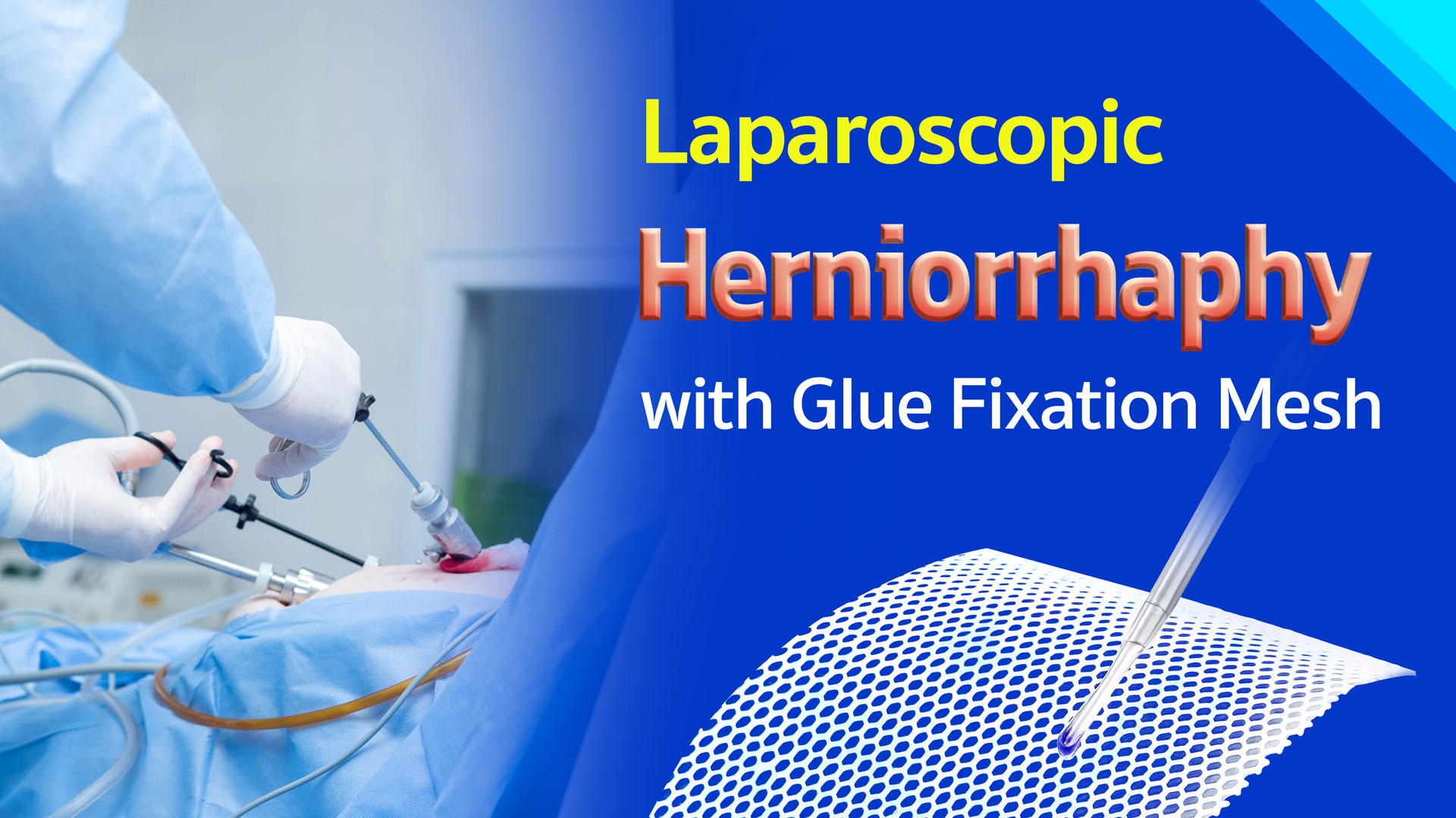
Laparoscopic Hernia Repair with Glue Fixation
Laparoscopic Herniorrhaphy with Glue Fixation Mesh
Laparoscopic hernia repair using medical-grade glue to secure the surgical mesh—often referred to as Atraumatic Fixation—is a highly popular and advanced surgical technique today. It is especially effective for treating small to medium-sized groin hernias (Inguinal Hernias).
The major advantages of this technique are minimal tissue trauma and the prevention of chronic postoperative pain.
Comparison: Medical Glue vs. Traditional Tacks
During laparoscopic surgery, the surgeon inserts a synthetic mesh to patch the hole or weak spot in the abdominal wall. Here is how the mesh securing methods compare:
Traditional Method (Mechanical Fixation): The surgeon uses surgical tacks or pins to anchor the mesh into the muscle. There is a risk that these tacks might irritate tiny nerves in the groin area, causing some patients to experience sharp twinges or chronic pain after surgery.
Medical Glue Method (Adhesive Fixation): The surgeon applies small drops of a special synthetic medical glue (such as cyanoacrylate-based or fibrin-based glue) to bond the mesh to the tissue. The glue dries and firmly secures the mesh in just a few seconds. This technique completely eliminates the need to puncture the tissue, drastically reducing the risk of nerve irritation.
Advantages of Using Medical Glue for Mesh Fixation
- Reduced Postoperative Pain: Significantly lowers the risk of immediate pain after surgery, as well as chronic, long-term pain.
- Faster Recovery: Because the internal tissues and muscles are not traumatized by metal tacks or stitches, patients can return to their daily routines and work much sooner.
- Comparable Strength to Traditional Methods: Medical-grade glue provides a remarkably strong hold. Once the glue secures the mesh to the tissue, the body naturally forms fascia (connective tissue) over it, integrating the mesh seamlessly into the abdominal wall. The glue itself will safely dissolve over time without leaving any harmful residues.
Surgical Procedure: Laparoscopic Hernia Repair with Glue Fixation
- Before the procedure, the patient is placed under general anesthesia to ensure complete comfort and a pain-free experience.
- The surgeon makes about three tiny incisions (0.5 to 1 centimeter each) on the abdomen to carefully insert a high-definition camera and precise surgical instruments.
- Using these instruments, the surgeon gently pulls the protruding hernia sac or intestine back into its proper position inside the abdominal cavity.
- A synthetic mesh is then inserted through the camera port and placed over the defect or weakened muscle wall. The mesh is sized to overlap the edges by at least 3 to 5 centimeters to securely cover the area and prevent it from slipping.
- Using a specialized applicator, the surgeon carefully drops or sprays medical glue along the edges of the mesh, firmly adhering it to the abdominal wall.
- The small external incisions are carefully closed with stitches.
- The total surgical time is approximately 2 hours for a unilateral (one-sided) hernia, and about 3 hours for a bilateral (both sides) hernia.
- After the procedure is completed, the patient is monitored in the recovery room for about 2 hours before being transferred to a private patient room. Following a short hospital stay of 1 to 2 days, the doctor will evaluate the patient for discharge.
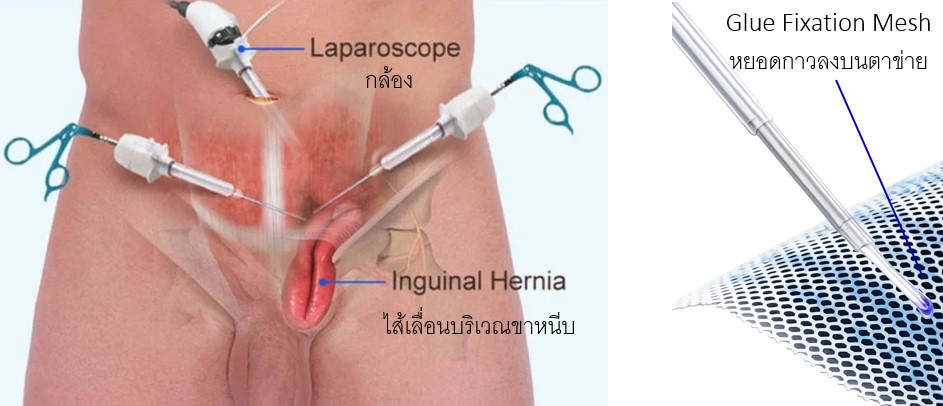
Laparoscopic Herniorrhaphy with Glue Fixation Mesh
Preparation Before Surgery
- Stop taking antiplatelet or blood-thinning medications for 7 days prior to the procedure.
- Fast from all food and water for at least 6 hours before the surgery.
- Inform your doctor of any underlying health conditions and any history of allergies (especially to medications, seafood, or contrast dyes).
Post-Operative Care
Avoid straining, forceful coughing or sneezing, and lifting heavy objects for about 3-4 weeks. This allows the tissues to fully integrate and heal seamlessly with the mesh. Please ensure you attend all scheduled follow-up appointments.
Package Prices
Laparoscopic Hernia Repair with Glue Fixation (3 Days / 2 Nights Hospital Stay)
- Approximately 155,000 - 165,000 THB / Unilateral (1 side)
- Approximately 210,000 - 220,000 THB / Bilateral (2 sides)
Terms & Conditions
- The package includes a 3-day, 2-night hospital stay.
- Prices are inclusive of doctor's fees, nursing service fees, room rates, meals, and take-home medications.
- Prices do not include pre-operative evaluations and post-operative follow-up consultation fees.
- Prices are subject to change based on the doctor's medical assessment or in the event of unforeseen complications.
- The procedure is performed under General Anesthesia.
- Prices are valid from June 1 to December 31, 2026.
- The hospital reserves the right to change prices and conditions without prior notice.
For More Information
- Surgery Clinic, G Floor (Building 1) Tel. 043-002-002 Ext. 1920
- Health Information Center Ext. 1905