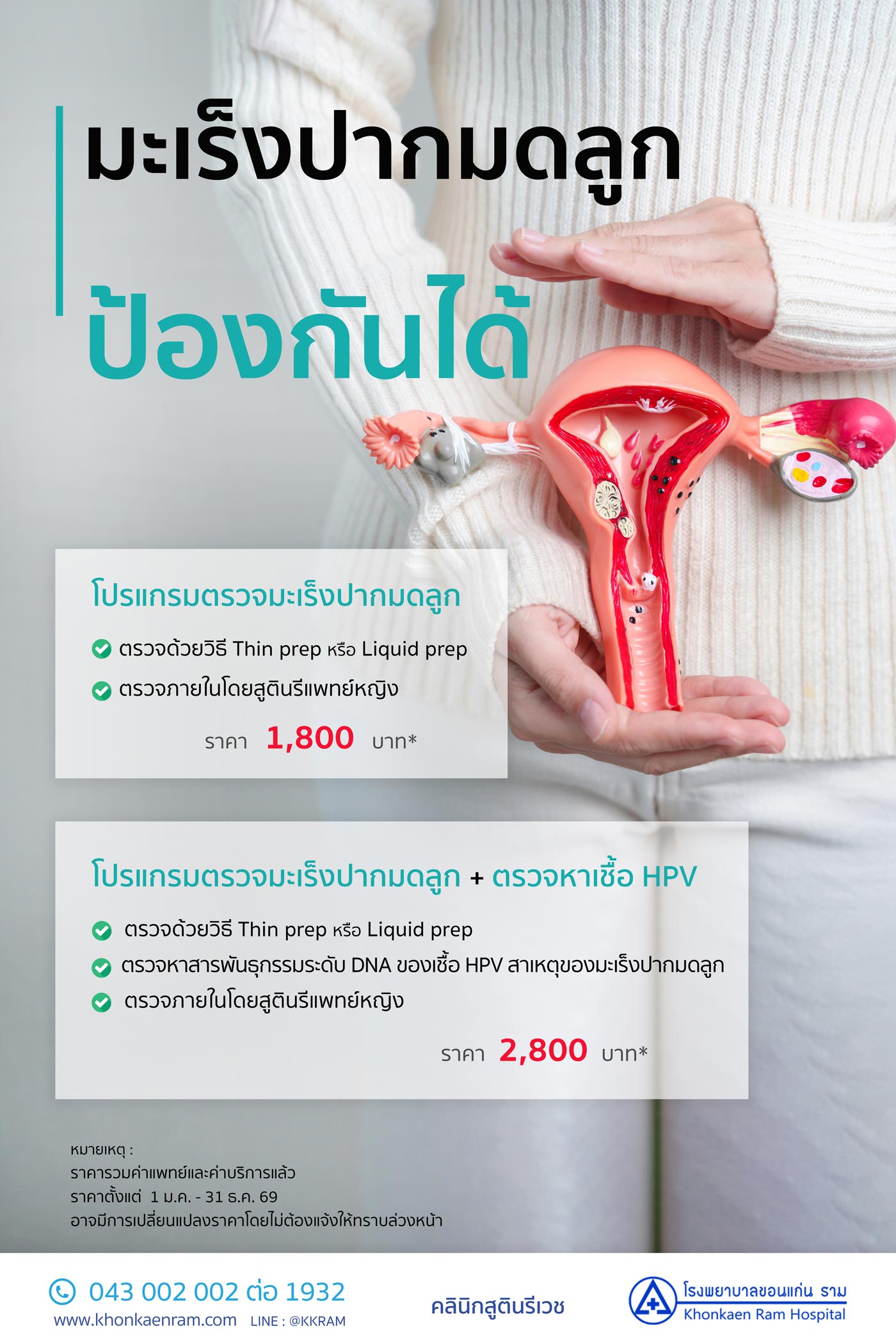
Cervical Cancer is Preventable
Cervical cancer is the second most common cancer among Thai women, after breast cancer. The main cause is often infection with the Human Papillomavirus (HPV), which is typically transmitted sexually. Early-stage cervical cancer often shows no abnormal symptoms. Therefore, cervical cancer screening and HPV vaccination help reduce the risk of developing cervical cancer.
Screening Methods
- **Pap Smear:** This is the traditional screening method where an obstetrician-gynecologist uses a device to gently scrape and collect tissue cells from the cervix for laboratory examination. This test looks for abnormal cells or cellular changes that could lead to cancer.
- **Liquid-Base Cytology (LBC):** (Thin Prep or Liquid Prep). This method is an advancement of the Pap Smear, offering greater efficiency and accuracy, and providing more detailed results than the traditional Pap Smear. In this method, the OB/GYN uses a small brush to collect tissue cells from the cervix and places them into a cell preservation solution. The sample is then processed by an automated machine to prepare the cells on a glass slide. This technique uses the liquid solution to help eliminate contaminants or other non-cancerous tissues, or reduce the dense overlapping of cells, allowing for better detection of cancerous cells.
- **HPV DNA Testing:** This method screens for the high-risk strains of HPV that cause cervical cancer, which increases the accuracy of the screening. It can determine if there is an infection with HPV strains 16 and 18. If no infection is detected, there is a 99% certainty that the risk of developing cervical cancer is very low within 1–2 years of the test.
“It is recommended that cervical cancer screening should begin for women aged 21 and above, and all women who are sexually active should undergo regular cervical cancer screening and pelvic examinations to detect any abnormalities in the pelvis, as well as get the HPV vaccine.”
Prevention with the HPV Vaccine
In addition to preventing cervical cancer, the HPV vaccine can also prevent genital warts, vaginal cancer, vulvar cancer, anal cancer, and oropharyngeal cancer (cancers of the mouth and throat).
Even after receiving the HPV vaccine, it is still recommended to undergo regular pelvic examinations and cervical cancer screening.
Preparation
- You should schedule your cervical cancer screening for a time when you are not menstruating.
- Do not douche before the test.
- Do not use vaginal suppositories, creams, or spermicides for 48 hours before the test.
- Abstain from sexual intercourse for 24 hours before the test.
Note
- Price includes doctor's fees and service fees.
- Prices are valid from January 1 to December 31, 2026.
- The hospital reserves the right to change prices without prior notice.
For More Information
- Health Check-up & Vaccine Center, 2nd Floor, Building 1, Tel. 043 002 002 ext. 2504
- Health Information Service Center, ext. 1905