
Our center offers comprehensive services, from **diagnosing symptoms and providing treatment** to administering medication, including **allergy vaccines**. These services are provided by specialists in **allergy, asthma, and immunology**.
An allergy occurs when the body is exposed to an allergen, triggering the immune system to produce an abnormal and excessive response to that substance. When re-exposed, this immune response causes allergic symptoms.
- If it affects the eyes, it's called **Allergic Conjunctivitis**.
- If it affects the nose, it's called **Allergic Rhinitis** or hay fever.
- If it affects the bronchial tubes, it's called **Allergic Bronchitis** or **Asthma**.
- If it affects the skin, it's called **Atopic Dermatitis** (eczema).
- If it affects the digestive system, it's called **Food Allergy**.
Common Allergy and Asthma Symptoms
- Nasal congestion, frequent colds
- Itching on the roof of the mouth
- Runny nose, frequent sneezing, stuffy nose, itchy throat
- Itchy skin rashes or hives with no known cause
- Eye irritation, watery eyes
- Asthma
- Cough, especially at night
- Food allergies or drug allergies
- Chest tightness, difficulty breathing
If you experience these symptoms frequently, you should promptly see a doctor for diagnosis and timely treatment before the condition worsens and potentially escalates into a severe allergic reaction known as **Anaphylaxis**. Anaphylaxis involves swelling of the face and respiratory system, and if not treated immediately, can lead to shock and even death.
- **Stop antihistamines 7 days before your appointment.**
- Some medications may contain antihistamine ingredients (e.g., cold medicine, nasal decongestants, anti-itch medication); these should also be stopped approximately 7 days before testing.
- Topical steroid creams can suppress test reactions and should also be discontinued.
- Nasal sprays or inhaled medications can be used as normal; no need to stop.
- You **do not need to fast** (abstain from food or drink) before the test.
**Specific IgE: Allergen Testing via Blood Test**
This method is more expensive than the Skin Test and is used when patients cannot undergo skin testing.
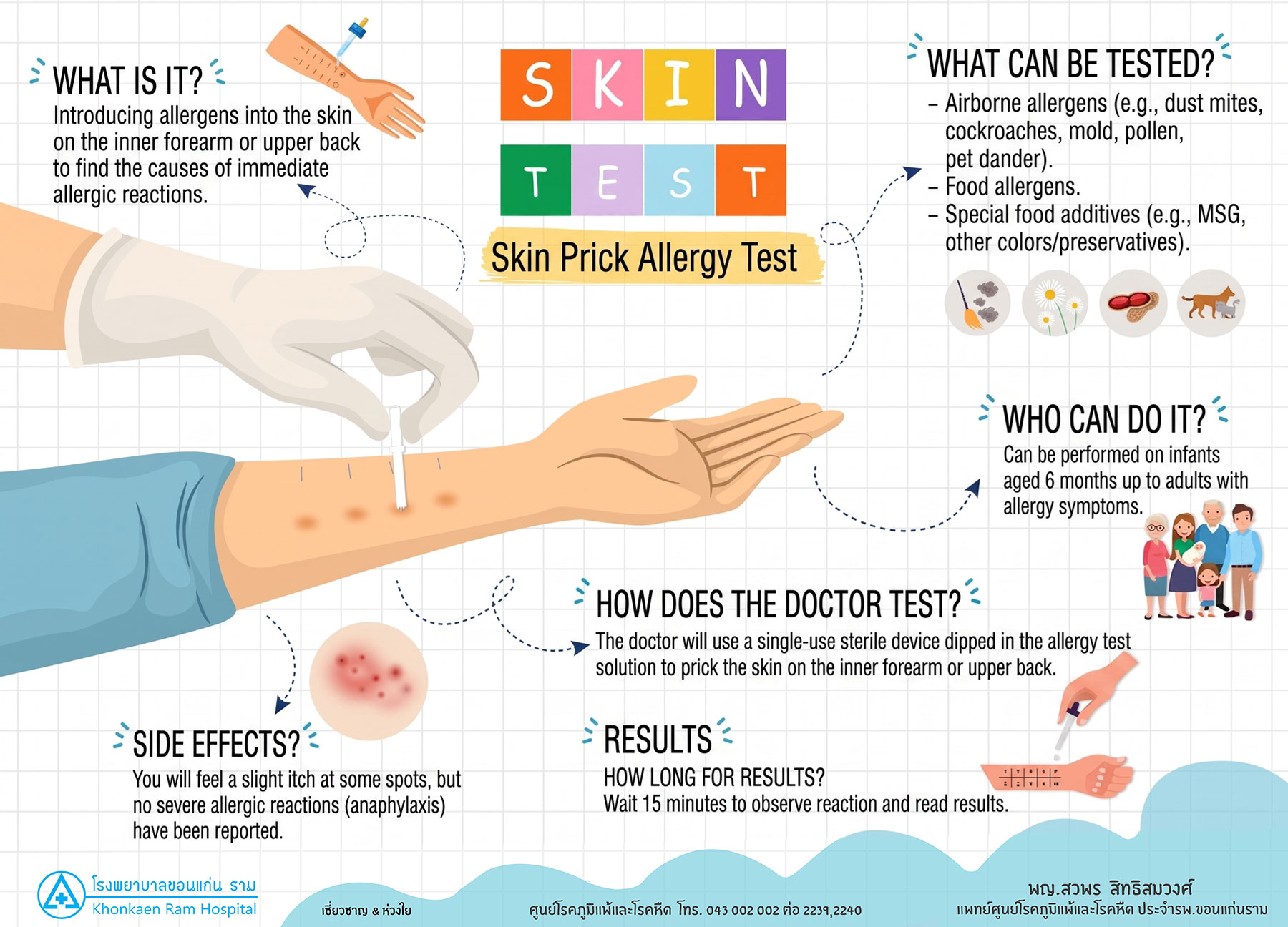
**Skin Test: Skin Prick Allergy Testing**
This involves lightly pricking the skin with a needle tip to allow the test solution to penetrate the skin. After a 15-minute wait, if the patient is allergic to a particular substance, a raised, swollen, and red reaction will appear in that area. Generally, this test can be performed on people of all ages, but in infants younger than 6 months and in the elderly, it may yield false-negative results due to lower skin sensitivity.
This is a diagnostic test to identify the cause of allergies, and it can be done in 3 ways:
- Blood test: **Specific IgE**
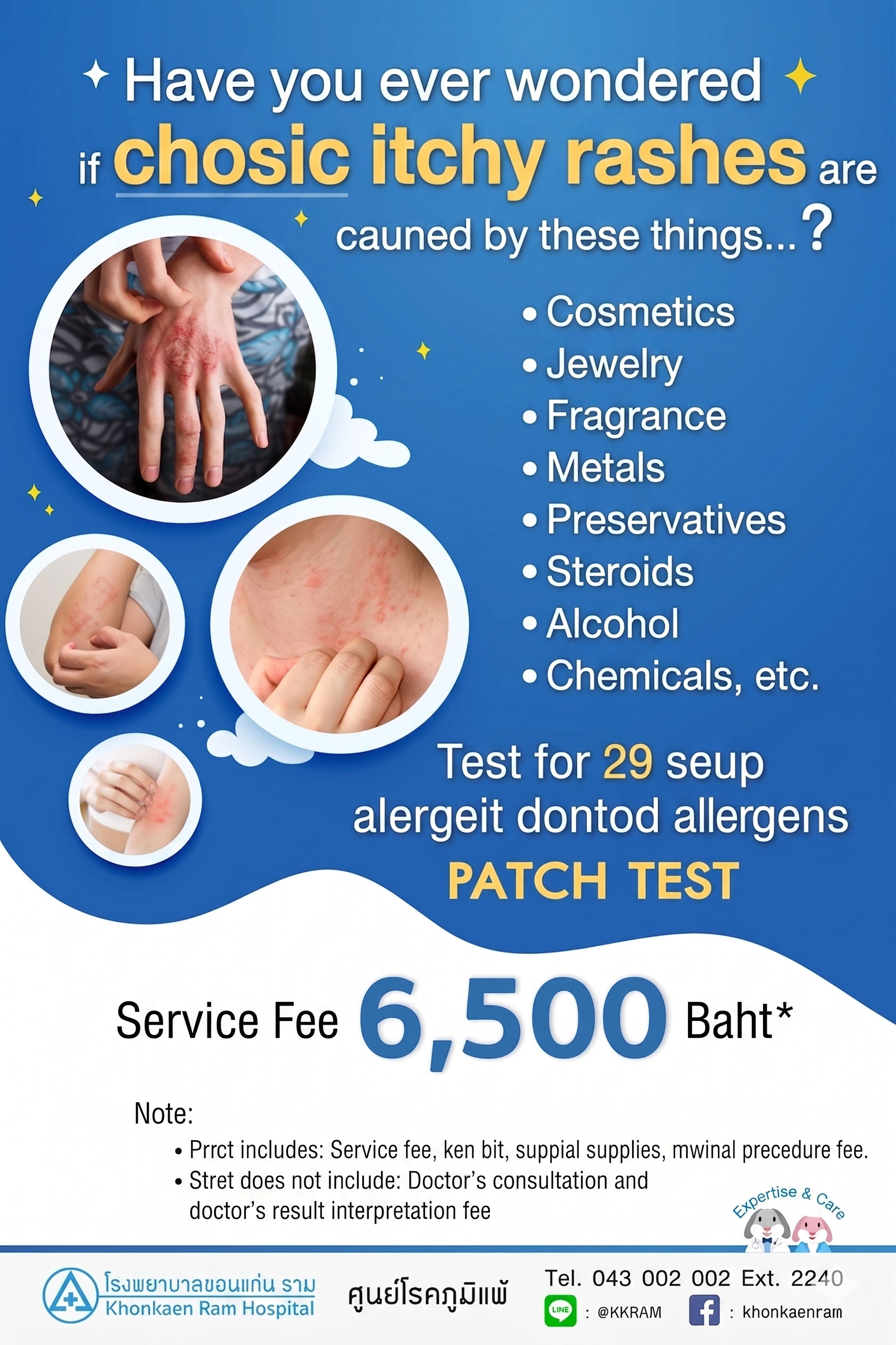
- Patch Test
- Skin Test
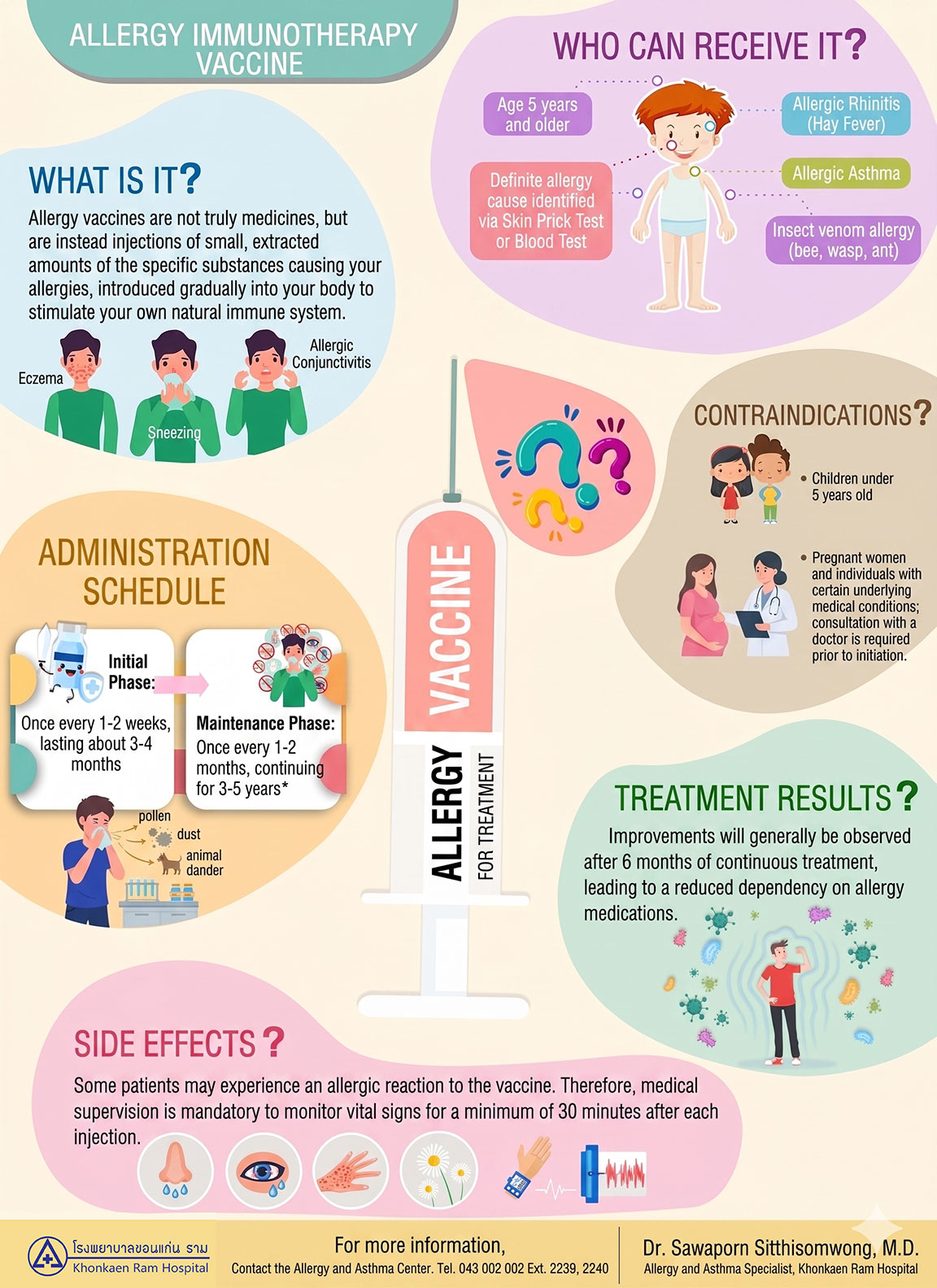
This treatment uses a vaccine prepared from the specific allergens to which the patient is allergic. It stimulates the patient's body to build immunity against these allergens. The vaccine is injected subcutaneously (under the skin) in small, gradually increasing doses. For the first 2-3 months, injections are given once a week, alternating arms, with the dosage slowly increased.
After reaching the maximum dose, the injection frequency is gradually extended until it's given only once a month. This helps maintain a high level of immunity in the body. This monthly injection should continue for 3 years before considering discontinuation.
Research studies have shown that patients who complete 3 or more years of allergy vaccine treatment maintain long-lasting immunity for several decades, almost for life, after stopping injections.
Benefits of Allergy Vaccinations
- **Treats the root cause**: It corrects the abnormal immune system response in allergic individuals.
- **Suitable for all severity levels**: Ideal for patients with mild to severe allergies, those who haven't responded well to medications or other treatments, those experiencing significant medication side effects, individuals who cannot avoid their allergens, or those who prefer to reduce frequent medication use.
- **Reduces symptoms**: For patients with asthma or allergic rhinitis, vaccinations can significantly alleviate symptoms and reduce or even eliminate the need for medication (depending on the initial severity of the patient's condition).
- **High success rate**: Patients who consistently receive vaccinations experience symptom improvement of approximately **70-90%**, depending on adherence to the schedule, the type of allergen, and individual patient factors.
Instructions After Receiving an Allergy Vaccine
- You **must remain seated for at least 30 minutes** after the injection for medical observation and to check for swelling at the injection site.
- **Avoid strenuous exercise or heavy work for at least 2 hours** after the vaccine. This is crucial to prevent the injected allergen from being absorbed more rapidly throughout the body, which could trigger a systemic allergic reaction.
- For **24 hours after the injection**, monitor for swelling or red rashes at the injection site, and record your observations. Before each subsequent injection, inform your doctor about any swelling or redness from the previous injection, its size, and any other unusual symptoms. This helps the doctor adjust the vaccine dosage appropriately, preventing allergic reactions.
- Patients should maintain good general health by getting **enough rest**, eating a **balanced diet**, and exercising **regularly**. This strengthens the body's immune response after vaccination, leading to significant and rapid improvement in allergy symptoms.


Phone Number
Call: 043-002-002 ext. 2306
Operating Hours
Open daily from 8:00 AM - 8:00 PM
Location
Building 1, 2nd Floor