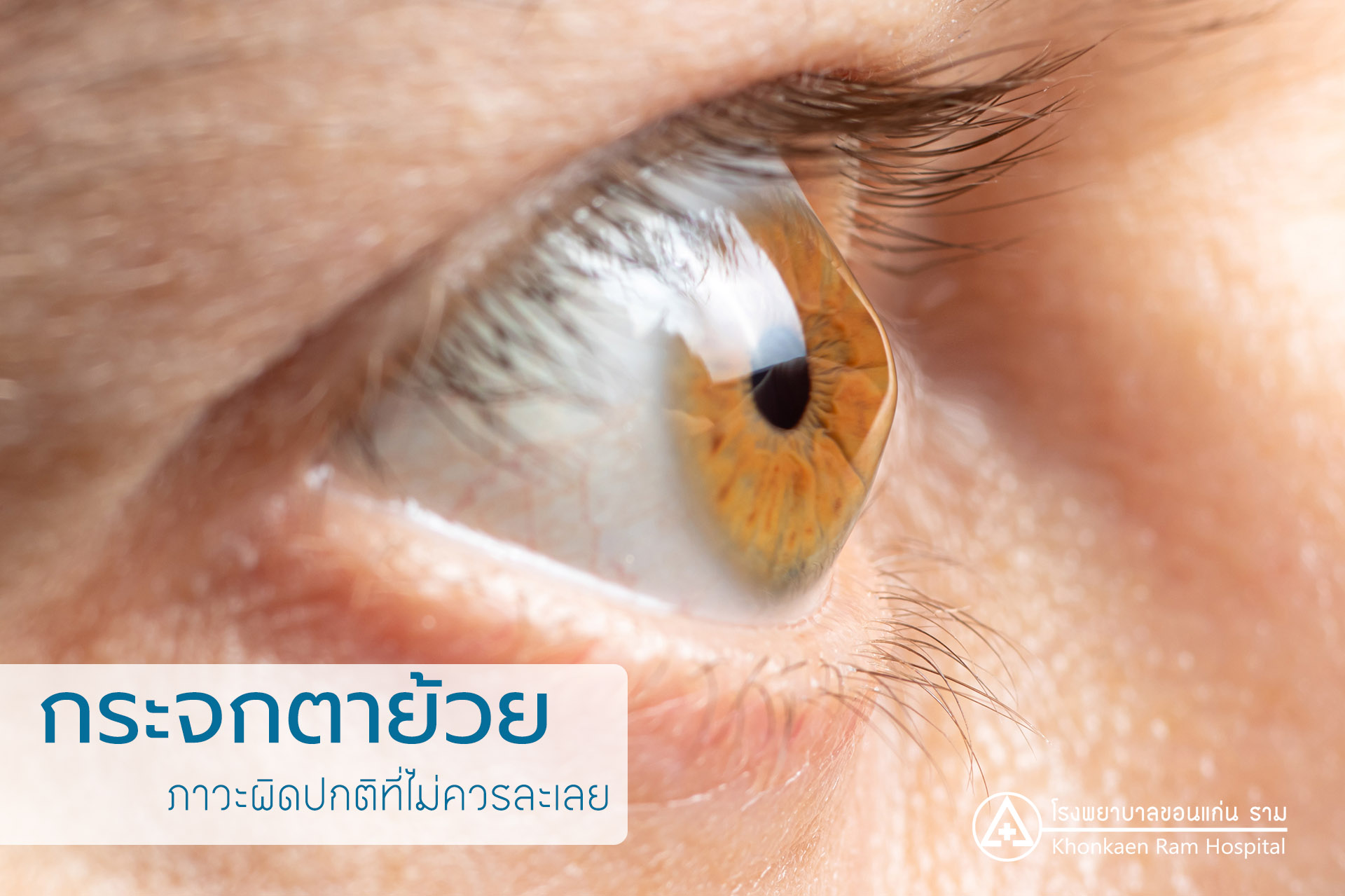
Keratoconus (Cone-shaped Cornea)
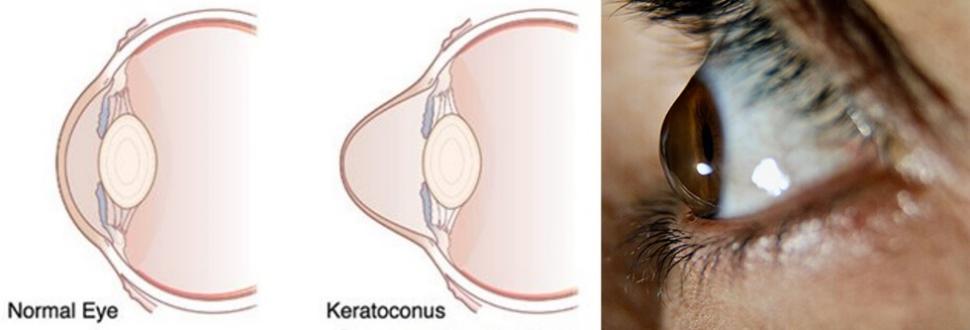
Keratoconus is a condition where the cornea becomes thin and bulges into a cone-like shape. It typically begins in childhood or adolescence and usually affects both eyes, though the severity may differ between them. It is found in approximately 1 in 10,000 people.
Symptoms
- The cornea bulges outward, which can be seen as a V-shape on the lower eyelid when looking down (Munson's sign).
- A rapid increase in astigmatism, or a combination of nearsightedness and astigmatism. Patients often need to change glasses frequently until a satisfactory prescription can no longer be found.
- In patients under the age of 20, the condition often progresses rapidly, potentially leading to corneal thinning, scarring (cloudiness), or even perforation.
- It is often discovered incidentally during pre-operative evaluations for LASIK, or in individuals who frequently visit optical shops for glasses but never see an ophthalmologist, yet still cannot find glasses that provide clear vision.
Treatment Options
- Rigid Gas Permeable (RGP) Contact Lenses: In the early stages, these semi-hard lenses are used to correct nearsightedness and astigmatism while helping to slow the progression of the disease.
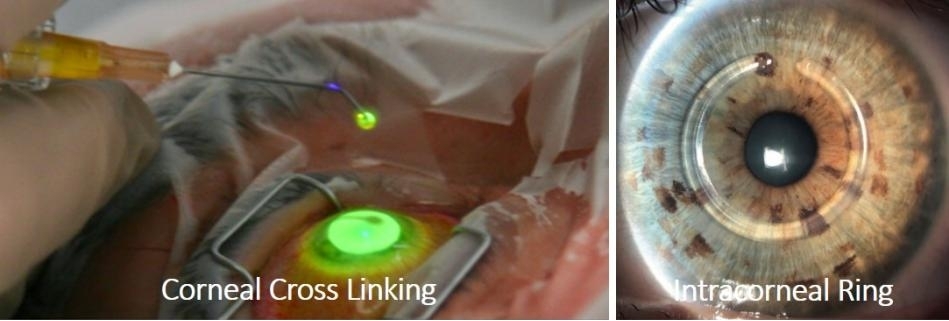
- Corneal Cross-Linking (CXL): This treatment strengthens the corneal tissue. It is generally recommended for patients under 30 whose condition is still progressing. The procedure involves removing the corneal surface (epithelium), applying Riboflavin (Vitamin B2) drops to the cornea, and then exposing it to UVA light (360 nm) to strengthen the chemical bonds (cross-links) in the cornea.
- Intracorneal Ring Segments (ICR): This involves implanting ring segments into the cornea. A Femtosecond laser (VisuMax) is used to create a tunnel for the implants, which reshape the cornea to reduce curvature and astigmatism. This can make it possible for the patient to wear glasses, contact lenses, or receive Implantable Collamer Lenses (ICL).
We highly recommend that individuals experiencing a rapid change in nearsightedness or astigmatism consult an ophthalmologist specializing in LASIK and ReLEx SMILE for a thorough evaluation. Early detection is key to effective treatment.
Khon Kaen Ram Hospital is fully equipped with advanced technology and expert ophthalmologists to diagnose and treat Keratoconus. Treatment may involve a single method or a combination (CXL Plus), such as CXL+PRK or ICR+CXL, depending on the severity and stage of the disease.
In severe cases where the cornea is extremely thin, scarred, or perforated, a corneal transplant may be required, using methods such as DALK (Deep Anterior Lamellar Keratoplasty) or PKP (Penetrating Keratoplasty). Treatment costs vary depending on the stage of the condition.