Trigger Finger
Trigger finger occurs when the protective sheath surrounding the flexor tendon at the base of the finger (the palm area) becomes inflamed, thickened, and swollen. This restricts the smooth movement of the tendon, making it difficult to bend or straighten the finger, often resulting in a sensation that the finger is "locked" in place.
The symptoms usually start with pain at the base of the finger, followed by a "snapping" or "catching" sensation whenever the finger is moved, bent, or straightened.
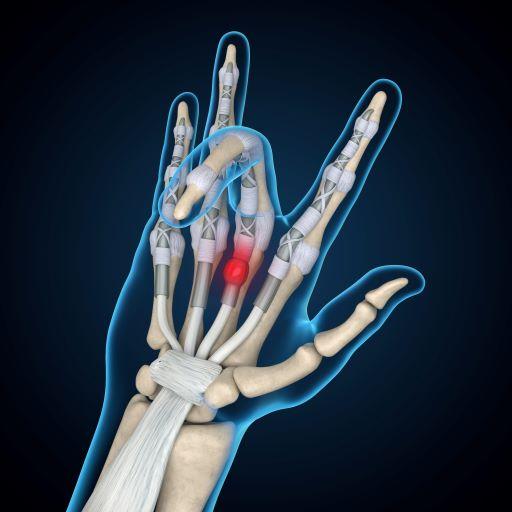
Who is at risk?
- It can occur in people of all ages and genders, especially those who use their fingers in a repetitive gripping or bending motion. This includes office workers typing or using a mouse for long periods, gamers, or those who use smartphones all day.
- Individuals who perform heavy manual labor or repetitive gripping, such as chefs, housewives, or technicians.

Symptoms and Stages
Stage 1: Pain and stiffness at the base of the finger.
Stage 2: A "catching" or snapping sensation when gripping or straightening the finger, but the finger can still be straightened on its own.
Stage 3: The finger locks in a bent position. It cannot be straightened independently and requires the other hand to manually pry it open.
Stage 4: Permanent stiffness where the finger cannot be fully bent or straightened, sometimes accompanied by joint deformity.
[Image showing the 4 stages of trigger finger progression]
Prevention
- Avoid carrying, pulling, or picking up excessively heavy objects. Use gloves for cushioning or use carts/trolleys instead.
- Avoid wringing clothes forcefully, as the repetitive strain can cause the tendon sheath to swell, triggering the condition.
- Take regular breaks to rest and stretch your hands, especially when performing continuous manual work or repetitive gripping tasks.
Treatment
There are various methods depending on the severity, including medication, splinting, physical therapy, steroid injections, or surgery.
Self-Care and Home Exercises
- Rest the affected finger and avoid activities that aggravate the condition.
- Soak the hand in warm water for 15-20 minutes.
- Soak the hand in cold water for 15 minutes if there is significant pain, swelling, or inflammation.
- Gently stretch the fingers up and down for 3-5 repetitions.


6. Clench and unclench your fist. Perform 10 times per set for 3-5 sets.
Physical Therapy Treatments with Medical Technology
- High Power Laser: Used in cases with acute inflammation of the tendon and sheath, high pain levels, or swelling. The laser helps reduce inflammation, alleviate pain, decrease swelling, and stimulate tissue repair, allowing for easier finger movement.

Physical therapist applying High Power Laser therapy
- Radial Shock Wave: Used when acute inflammation has subsided but finger stiffness or "catching" remains. The shock waves stimulate new blood vessel formation and tissue repair, making the tendon sheath more flexible and allowing for smoother movement.
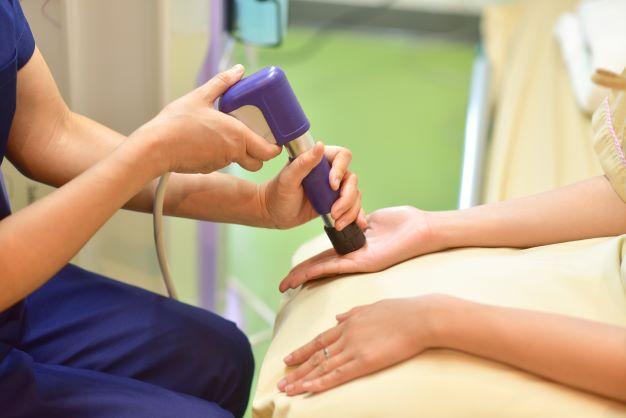
Physical therapist applying Radial Shock Wave therapy
Related Packages

Initial Service Fees
Standard service rates for Khon Kaen Ram Physical Therapy Clinic.

"Pain Relief" Program
Effective physical therapy for Shoulder Pain, Office Syndrome, and Plantar Fasciitis to relieve pain and restore mobility.

Neck Pain Relief
Comprehensive treatment for neck pain, alleviating muscle tension and improving postural alignment using advanced physical therapy techniques.

Knee Pain Relief
Knee Pain Management & Physical Therapy Program

Achilles Tendinitis
Achilles Tendinitis Recovery & Physical Therapy Program

Chronic Back Pain
Comprehensive rehabilitation and physical therapy program for chronic back pain relief.

Chronic Shin Splints Treatment
Specialized physical therapy program for Medial Tibial Stress Syndrome (Shin Splints).

Sports Injury Treatment
Specialized physical therapy program for acute sports-related injuries and muscle strains.

Trigger Finger Treatment
Specialized physical therapy program to relieve pain and improve finger mobility for trigger finger sufferers.

Mom's Back Ache: Relief for Postpartum Back Pain
Specialized physical therapy for mothers experiencing back pain from carrying or nursing their children.

Wrist & Arm Pain: Relief for De Quervain's in Mothers
Specialized physical therapy for De Quervain's Tenosynovitis, often caused by lifting and carrying a child.

Plugged Milk Ducts Treatment
Specialized therapeutic ultrasound program to clear blocked milk ducts and relieve breast engorgement.