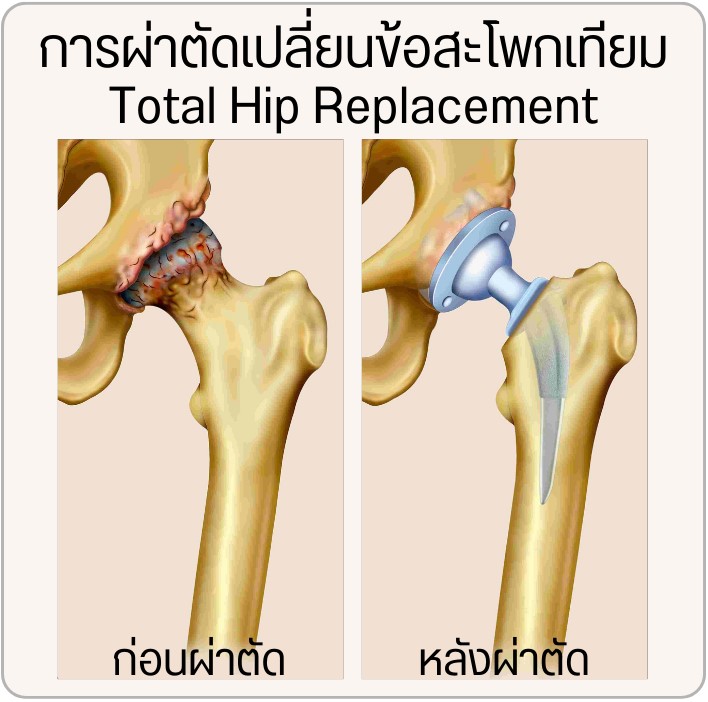
Total Hip Replacement (Total Hip Arthroplasty)
Hip Osteoarthritis can be caused by various factors, including aging, long-term use of steroids, excessive smoking or alcohol consumption, previous hip injuries, or joint wear and tear from heavy use.
Common symptoms include hip stiffness, difficulty bending over, and persistent pain during daily activities.
The Procedure
During surgery, the damaged parts of the hip joint are removed and replaced with artificial components (prostheses). Depending on the severity, a doctor may perform a Hip Hemiarthroplasty (replacing only the femoral head) or a Total Hip Replacement (replacing both the femoral head and the socket/acetabulum).
The primary goals of this surgery are to relieve pain, restore mobility, and allow the patient to return to their normal daily life.
Who is a Candidate for Hip Replacement?
- Patients experiencing severe hip pain that limits mobility and the ability to perform daily routines.
- Those who require daily pain medication to function.
- Patients who have tried conservative treatments—such as physical therapy, injections, or medication—without significant improvement.
Pre-Operative Preparation
- Quit Smoking: Stop smoking at least 2 weeks before surgery. This helps prevent respiratory infections, improves blood circulation, and reduces the risk of surgical site infections and other complications.
- Manage Underlying Conditions: Ensure chronic illnesses are under control. For example, managing diabetes helps prevent infection, and controlling hypertension reduces the risk of excessive bleeding during the procedure.
- Medication Consultation: Consult your doctor about pausing certain medications, including blood thinners (anticoagulants/antiplatelets), rheumatoid arthritis drugs, and Non-Steroidal Anti-Inflammatory Drugs (NSAIDs). You must also inform your doctor about any herbal remedies or dietary supplements, as these can affect blood clotting or lead to post-operative blood clots and other complications.



Related Packages

Initial Service Fees
Standard service rates for Khon Kaen Ram Physical Therapy Clinic.

"Pain Relief" Program
Effective physical therapy for Shoulder Pain, Office Syndrome, and Plantar Fasciitis to relieve pain and restore mobility.

Neck Pain Relief
Comprehensive treatment for neck pain, alleviating muscle tension and improving postural alignment using advanced physical therapy techniques.

Knee Pain Relief
Knee Pain Management & Physical Therapy Program

Achilles Tendinitis
Achilles Tendinitis Recovery & Physical Therapy Program

Chronic Back Pain
Comprehensive rehabilitation and physical therapy program for chronic back pain relief.

Chronic Shin Splints Treatment
Specialized physical therapy program for Medial Tibial Stress Syndrome (Shin Splints).

Sports Injury Treatment
Specialized physical therapy program for acute sports-related injuries and muscle strains.

Trigger Finger Treatment
Specialized physical therapy program to relieve pain and improve finger mobility for trigger finger sufferers.

Mom's Back Ache: Relief for Postpartum Back Pain
Specialized physical therapy for mothers experiencing back pain from carrying or nursing their children.

Wrist & Arm Pain: Relief for De Quervain's in Mothers
Specialized physical therapy for De Quervain's Tenosynovitis, often caused by lifting and carrying a child.

Plugged Milk Ducts Treatment
Specialized therapeutic ultrasound program to clear blocked milk ducts and relieve breast engorgement.