A digital mammogram is a breast X-ray that uses lower doses of radiation than general X-rays while providing higher resolution and sharper images. This allows for early detection of abnormalities, such as microcalcifications (small calcium deposits) that are often too small to be felt or detected by ultrasound. Digital mammograms are essential for identifying small breast cancers.
Advantages of Digital Mammography
- Provides high-resolution images for early detection, which saves lives.
- Reduces radiation exposure by 30–60% compared to analog (film) mammography.
- Decreases procedure time as images are captured continuously without needing to change or develop film.
- Increases patient comfort with specialized compression paddles designed to tilt and fit the breast’s natural shape.
- Allows doctors to view high-clarity images instantly on a monitor, reducing the need for repeat X-rays.
Why Should Women Get a Mammogram?
Breast cancer incidence in Thailand is rising and is the most common cancer among women. Mammography is globally recognized as the most effective tool for detecting calcifications—some of which are early signs of breast cancer that cannot be found through a physical exam.
Examination Methods
- Mammogram: An X-ray of both breasts, usually consisting of two views:
- Craniocaudal View (CC) - Top-down view
- Mediolateral Oblique View (MLO) - Side/angled view
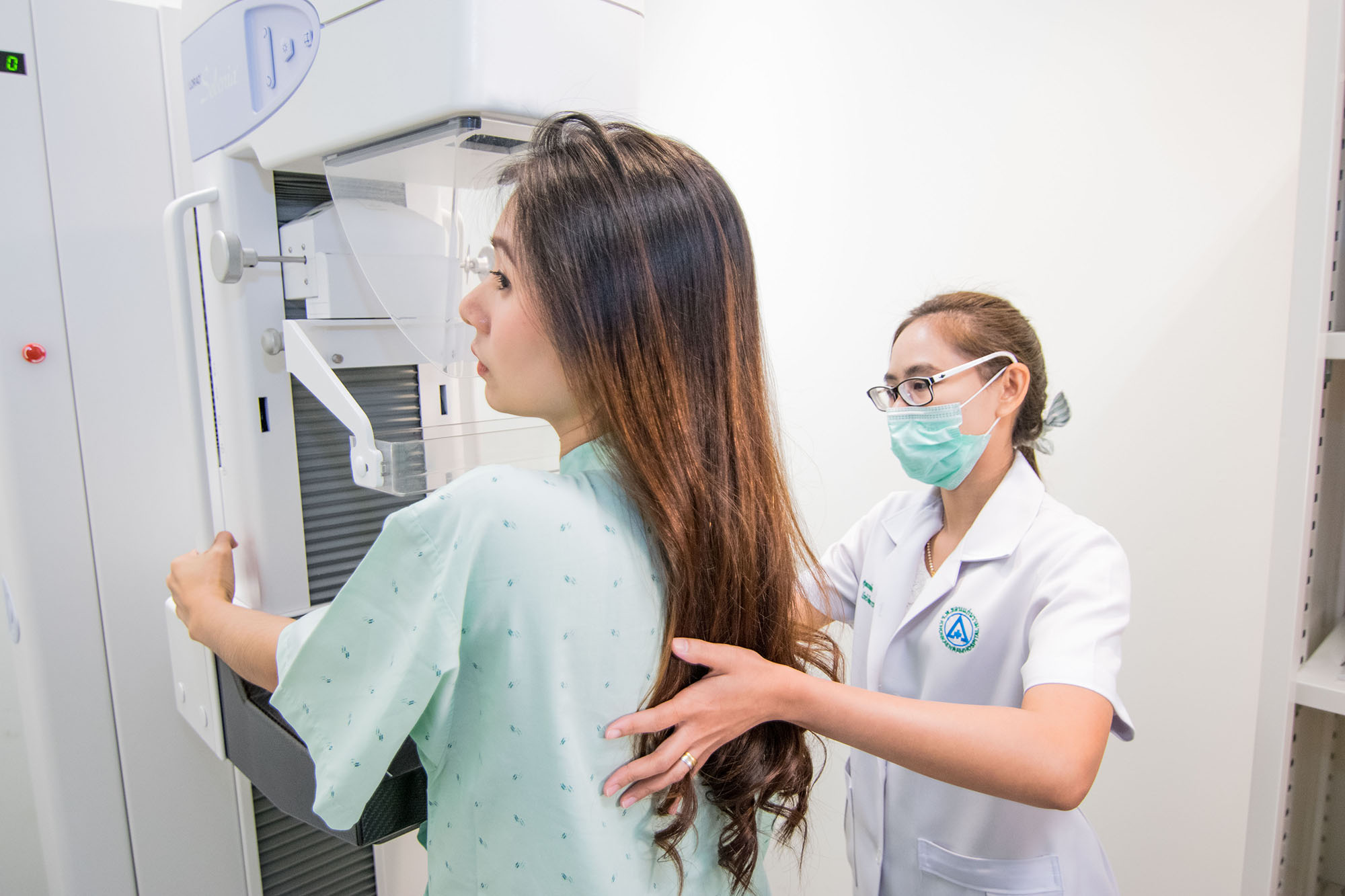
Direct View (CC)

Side/Oblique View (MLO)
When Should You Get a Mammogram?
All women should have at least one baseline screening between the ages of 35–40. Women aged 40 and older should have one annually. Those with a family history of breast cancer (especially on the maternal side) may need to start screening earlier.
Who is at Higher Risk? (Annual screening recommended)
- Women with immediate relatives (mother, sister, daughter) who have had breast cancer.
- Those who have had radiation therapy to the chest for other cancers.
- Women on regular hormone replacement therapy.
- Those who have already had cancer in one breast.
- Individuals whose biopsy results showed Atypical Ductal Hyperplasia.
Frequently Asked Questions
Q: Can I get a mammogram during my period?
A: Yes. The menstrual cycle does not significantly affect the image quality. However, breasts tend to be more sensitive or tender just before or during a period, which may increase discomfort during compression. The best time for a scan is 7–14 days after your period starts.
Q: Does it hurt?
A: Compression is necessary to spread the breast tissue so that abnormalities aren't hidden and to reduce the radiation dose. According to a study of 765 patients, 23% felt no pain, 48% felt slight pain, 25% felt moderate pain, and only 4% reported significant pain.
Q: Is there a lot of radiation?
A: The radiation amount is very low and has no reported long-term danger. However, you must ensure you are not pregnant before the scan to avoid unnecessary exposure to the fetus.
Q: Is a mammogram 100% reliable?
A: There are limitations, primarily breast density. In younger women, dense tissue can sometimes hide abnormalities. Additionally, about 10% of cancers may not be visible on a mammogram alone. Therefore, ultrasound is often used alongside mammography to increase accuracy.
Q: What is the difference between Ultrasound and Mammography?
A: Mammography is superior at finding tiny calcifications (early cancer signs) in women over 40. Ultrasound is better for younger women with dense tissue and is excellent for determining if a lump is a fluid-filled cyst or a solid mass.
Important Preparation and Facts
- Early detection requires a combination of:
- Monthly Breast Self-Examination (BSE)
- Annual Clinical Breast Examination (CBE) by a doctor
- Annual Mammogram for women aged 40-50+
- On the day of the exam, do not apply creams, powders, perfumes, or deodorants to the breasts or underarms, as these can appear as abnormal spots (calcifications) on the image.
- Wear a two-piece outfit (shirt and pants/skirt) for convenience.
"In summary: Every woman should perform monthly self-exams and see a doctor annually. Get a baseline mammogram at age 35, and an annual mammogram starting at age 40 for the best chance of early detection and a permanent cure."