Stroke (Cerebrovascular Disease)
Stroke is a leading cause of paralysis and the third leading cause of death in Thailand, following cancer and heart disease. It is particularly prevalent in men and individuals aged 45 and older.
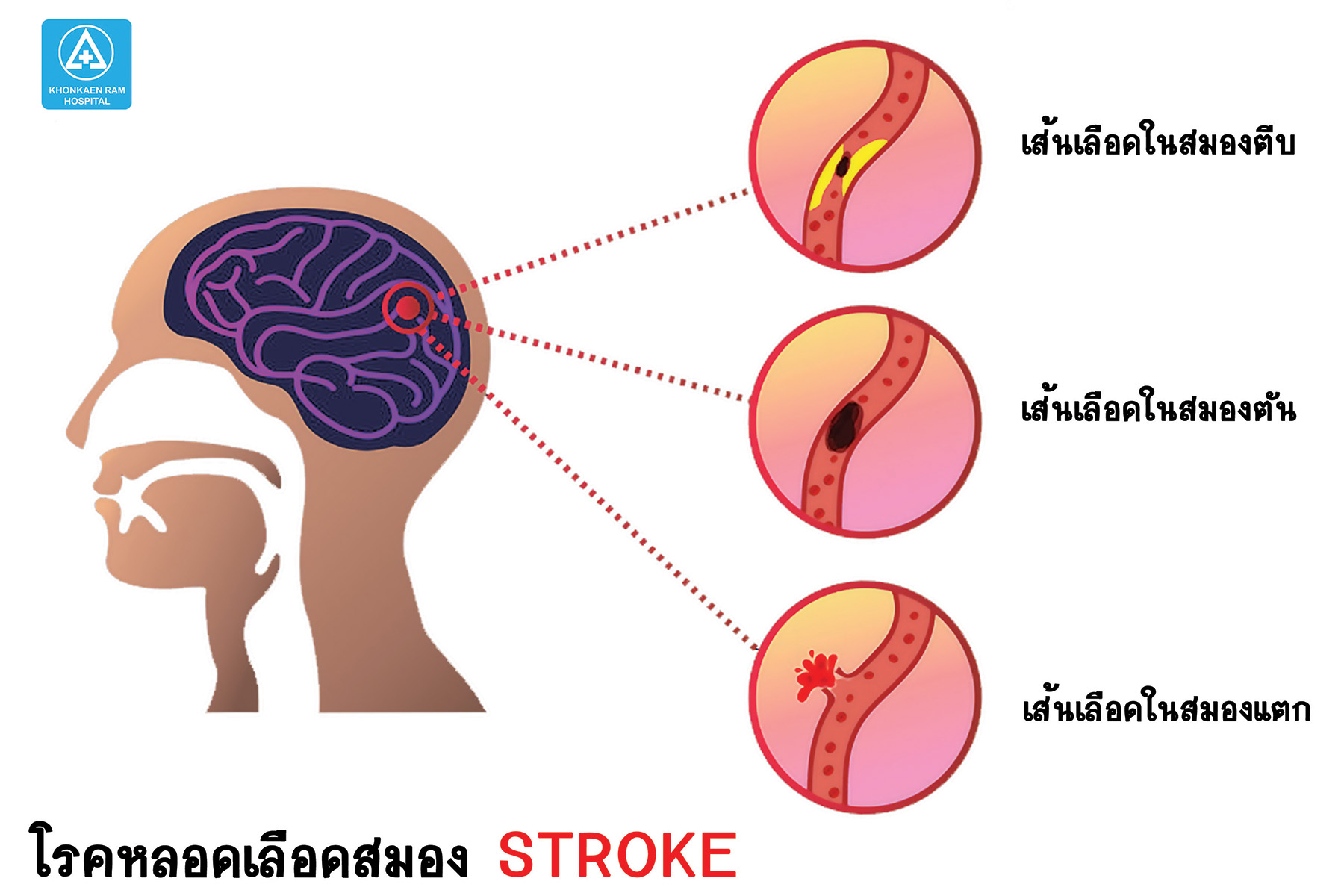
There are two main types of stroke:
- Hemorrhagic Stroke (Bleeding in the Brain): Accounts for about 20% of cases. Major risk factors include high blood pressure (hypertension) or cerebral aneurysms.
- Ischemic Stroke (Blocked or Narrowed Arteries): Accounts for about 80% of cases. It occurs when arteries are narrowed by plaque (fats and calcium) or blocked by blood clots traveling from other parts of the body, such as the heart. This leads to acute paralysis and may cause loss of speech or vision.
If you experience the following symptoms, go to the hospital IMMEDIATELY. Do not wait. Every minute counts to reduce the risk of permanent disability.
- Weakness or numbness on one side of the body.
- Sudden blurred vision or loss of vision, especially in one eye.
- Sudden, severe headache unlike any you’ve had before.
- Difficulty speaking, slurred speech, or being unable to speak clearly.
- Confusion or trouble understanding others.
- Seizures, loss of consciousness, or irregular breathing. Delayed treatment can be fatal.
Warning signs may occur on one or both sides of the body. Remember the F.A.S.T. principle:
F (Face): Facial drooping. A (Arm): Arm weakness. S (Speech): Difficulty speaking. T (Time): Time to call emergency services.
Risk Factors for Stroke
- High blood pressure (Hypertension)
- Smoking
- Diabetes
- Heart disease
- High blood cholesterol (Hyperlipidemia)
- Advanced age
- Stress
- Obesity
- Lack of exercise
- Alcohol consumption
Diagnostic Procedures
- Blood tests to identify underlying causes.
- Electrocardiogram (EKG/ECG).
- CT Scan of the brain.
- MRI (Magnetic Resonance Imaging).
Stroke Treatment
Treatment depends on the type, severity, and time since the onset of symptoms. The faster you receive treatment, the lower the risk of death and long-term disability.
Treatment Goals
- Control blood pressure to ≤ 140/80 mmHg.
- Control LDL cholesterol to < 100 mg/dL.
- Control blood sugar (HbA1c) to ≤ 7%.
- For Ischemic Stroke (Blocked Arteries):
- Thrombolytic Therapy: Receiving "clot-busting" medication (rtPA) to reopen blocked vessels.
- Antiplatelet/Anticoagulant medication: To prevent future clots from forming.
- For Hemorrhagic Stroke (Brain Bleed):
- Medical management to reduce brain damage caused by bleeding.
- Stopping or reducing the dose of blood-thinning medications.
- Surgery: To repair blood vessels and stop the bleeding (in applicable cases).
- Rehabilitation & Support:
- Physical therapy to restore muscle strength and joint mobility.
- Management of complications associated with prolonged bed rest, such as pressure sores, constipation, or lung infections.
Prevention and Recurrence Control
- Exercise regularly for at least 30 minutes, 5 days a week.
- Maintain a healthy weight.
- Quit smoking and avoid alcohol.
- Have annual health check-ups to screen for risk factors.
- If you have existing risk factors, take your medications strictly as prescribed. **Never stop medication on your own.**
- Consume a diet low in fat and salt. Increase your intake of fruits and vegetables.
- Educate yourself and your caregivers about early warning signs.