
Gender Selection
In family planning, beyond preparing for a pregnancy that suits the mother’s health and the family's finances, another common desire for many parents is: "How can we have a child of a specific gender?" While results are not 100% guaranteed, there are traditional and scientific methods used to influence the outcome.
Medical scientists have studied this for years, and the general conclusion is:
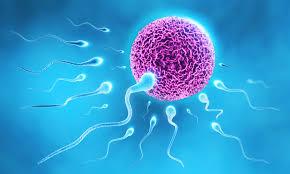
The gender of the child is determined by the father. To conceive, the father's sperm must fertilize the mother's egg. The sperm itself is the determining factor of the baby's sex.
There are two types of sperm:
- X-Chromosome (Female): Large, oval head, short tail, and moves slowly.
- Y-Chromosome (Male): Small, round head, long tail, and moves very quickly.
[Image illustrating X and Y sperm swimming towards an egg]
The gender is determined by whichever type of sperm reaches and fertilizes the egg first. To influence this, we try to create an environment that favors one over the other.
The acidity or alkalinity (pH levels) of the reproductive tract plays a significant role in which sperm survives and swims faster. This principle has been adapted into the following guidelines:
If You Want a Boy (Male Child)
- Timing: Have intercourse as close to ovulation as possible. Ovulation typically occurs in the middle of the menstrual cycle. You can track this by measuring Basal Body Temperature (BBT). It is recommended to abstain from intercourse for 3-5 days before ovulation to ensure a high sperm count.
- pH Environment: Before intercourse, the woman may rinse the vaginal area with an alkaline solution (e.g., 2 tablespoons of sodium bicarbonate mixed with 1 liter of clean water).
- Female Orgasm: It is recommended that the woman reaches orgasm during intercourse, as this creates a more alkaline environment favorable to Y-sperm.
- Deep Penetration: At the time of ejaculation, deep penetration helps deposit the fast-moving but shorter-lived Y-sperm closer to the cervix.

If You Want a Girl (Female Child)
- Timing: Have intercourse several days before ovulation, rather than on the day itself. X-sperm are hardier and live longer than Y-sperm.
- pH Environment: Before intercourse, the woman may rinse the area with a mildly acidic solution (e.g., 2 tablespoons of vinegar mixed with 1 liter of clean water).
- Orgasm: It is suggested to avoid female orgasm before ejaculation, as an acidic environment favors the slower but more resilient X-sperm.
- Shallow Penetration: Ejaculation occurring further from the cervix requires the sperm to swim through the naturally acidic vaginal environment, which X-sperm are more likely to survive.

Related Packages
Call us