What Every Woman Should Know: Hysteroscopy (การส่องกล้องโพรงมดลูก)
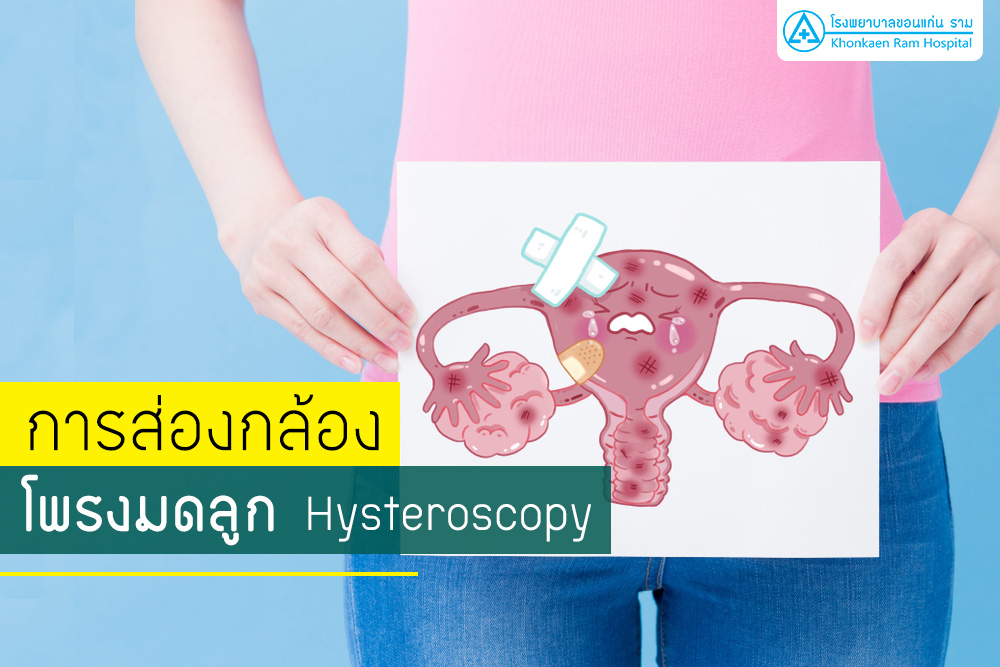
Hysteroscopy is a procedure where a doctor uses a small telescope (Hysteroscope), only about 5 mm in diameter, to look inside the uterus. It passes through the vagina and cervix directly into the uterine cavity, allowing the doctor to examine the cervical canal, the uterine interior, and the openings of the fallopian tubes.
The main advantage over traditional "dilation and curettage" (D&C) is that the doctor can see abnormalities inside the uterus directly and clearly.
During a hysteroscopy, the doctor can diagnose and treat the condition simultaneously. Furthermore, small fibroids or polyps can be removed without any abdominal incisions, ensuring no damage to the surrounding uterine lining.
When is a Hysteroscopy Recommended?
- Women with abnormal menstrual bleeding (either in volume or duration).
- Women with heavy periods where no external uterine pathology is found. In these cases, the doctor may perform endometrial ablation (destroying the lining) to stop the bleeding.
- Postmenopausal women experiencing vaginal bleeding, especially if bleeding persists after a standard biopsy or D&C.
- Women facing infertility combined with a history of very light or absent periods after a previous D&C, which may suggest intrauterine adhesions (scars).
- Cases where an ultrasound suggests the presence of fibroids or polyps inside the uterine cavity.
- Congenital uterine abnormalities, such as a uterine septum (a wall dividing the uterus).
- Difficulty removing an Intrauterine Device (IUD). If the string is lost or the device is stuck, a hysteroscope is used to locate and retrieve it.
Benefits of Hysteroscopy
- Assisting in the insertion or removal of intrauterine contraceptive devices.
- Removing uterine adhesions (scar tissue from previous surgeries or infections).
- Performing targeted biopsies by taking precise tissue samples from suspicious areas.
- Treating the uterine lining through cauterization (heat or cold) to stop chronic bleeding.
- Removing polyps or small uterine fibroids (myomas).

Related Packages
Call us