Appendicitis: How to Identify the Pain (ปวดท้องอย่างไร เป็นไส้ติ่งอักเสบ)

What is the Appendix? Is it important?
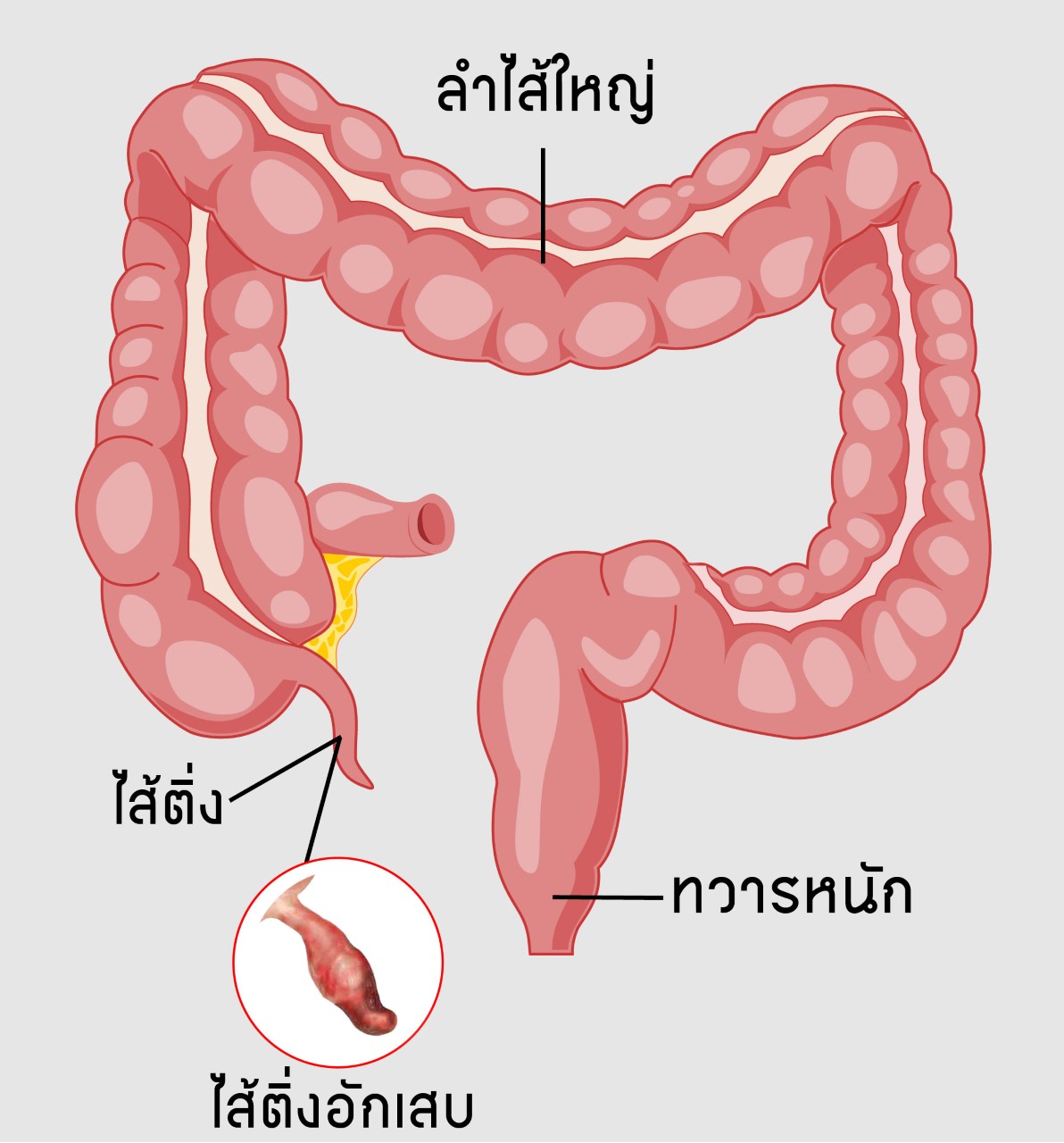
The appendix is a small, tube-like organ attached to the first part of the large intestine, measuring about 3-4 inches long. While its exact function is not fully understood, it is believed to play a role in the immune system and acts as a reservoir for beneficial gut bacteria that assist in digestion.
Location of the Appendix
The appendix is located at the beginning of the colon, typically in the lower right abdomen.
How does Appendicitis occur?
Appendicitis happens when the hollow interior of the appendix becomes blocked. This blockage causes swelling, inflammation, and potential infection. If left untreated, the appendix can rupture (burst), spreading infection throughout the abdominal cavity or into the bloodstream, which can be life-threatening.
Self-Observation Checklist
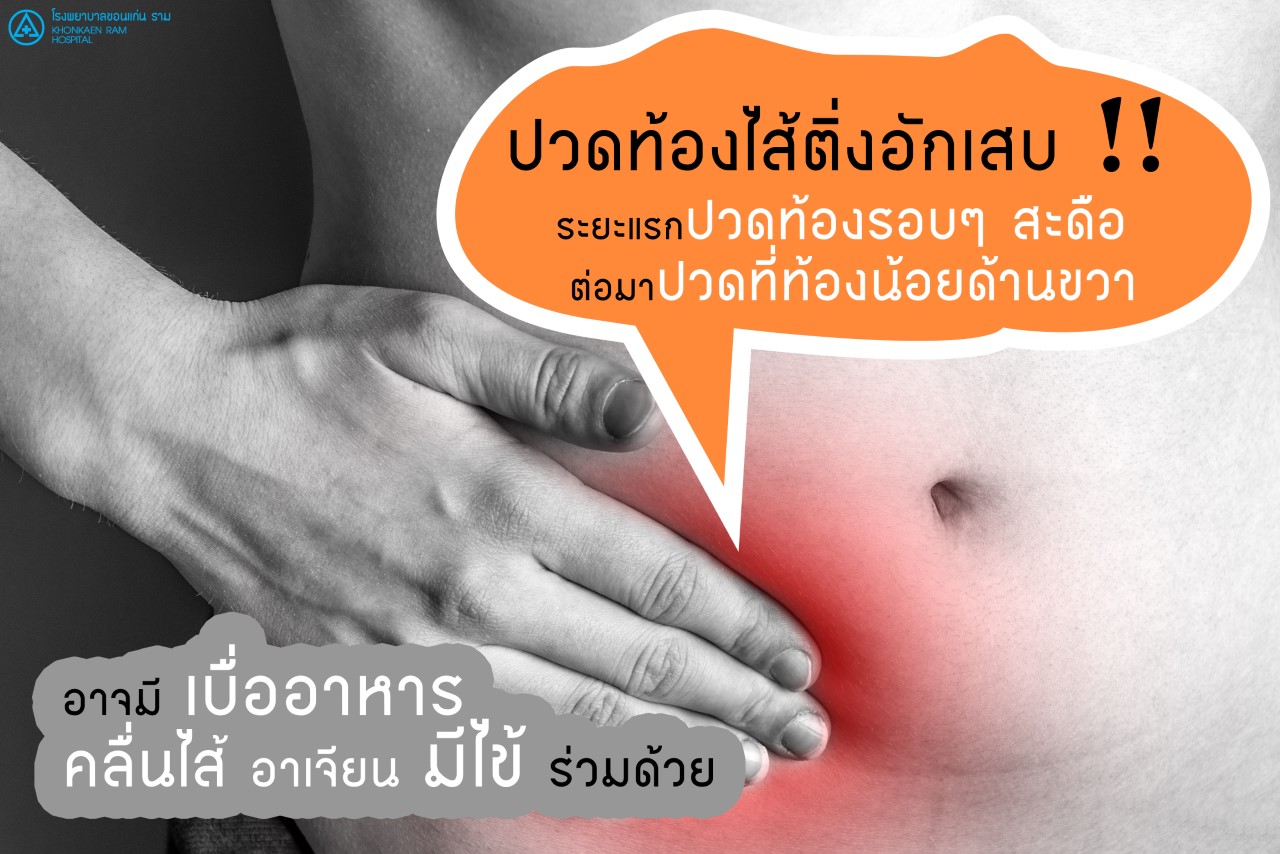
- Pain Progression: Initially, the pain usually starts in the middle of the abdomen, around the navel (belly button). As the inflammation worsens, the pain shifts to the lower right abdomen.
- Associated Symptoms: Loss of appetite, nausea, vomiting, and fever often accompany the pain.
- Rupture Signs: If treatment is delayed and the appendix bursts, systemic infection signs appear, such as high fever, dry mouth, extreme fatigue, and severe abdominal tenderness.
Hospital Diagnosis: What to expect?
Physicians will take a detailed history, perform a physical exam, and use blood and urine tests. They often use the Alvarado Score to assess the likelihood of appendicitis. For a definitive diagnosis, advanced imaging like Ultrasound or a CT Scan is used to confirm swelling and prevent unnecessary surgery.
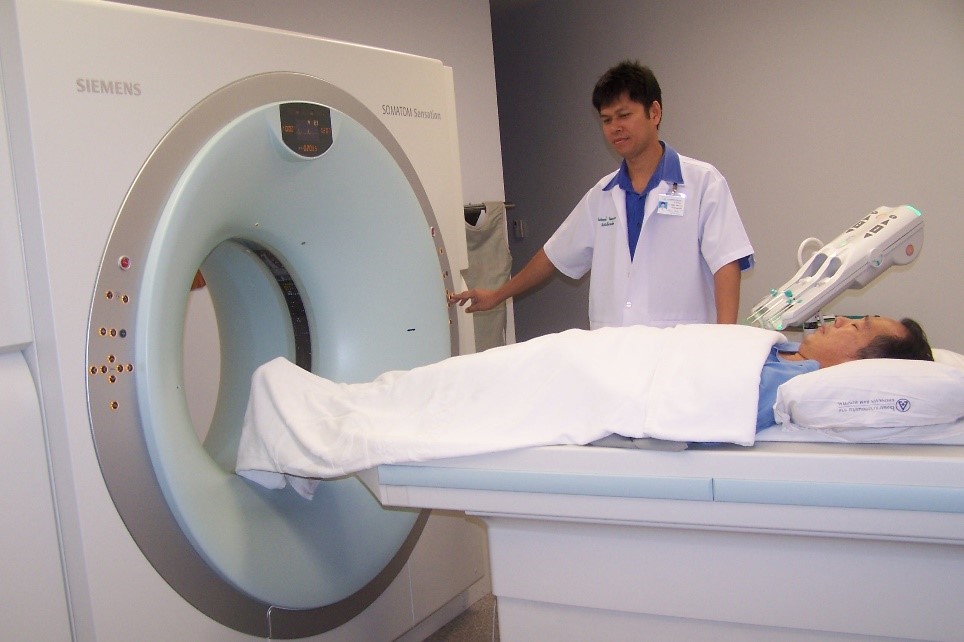
CT Scan showing a swollen appendix (indicated by red arrow).
Treatment: Surgical Options
Once diagnosed, the standard treatment is surgical removal (Appendectomy) combined with antibiotics.
There are two primary surgical methods:
- Open Appendectomy: A traditional incision is made in the lower right abdomen directly over the appendix.
- Laparoscopic Appendectomy: The modern standard. It uses tiny incisions and a camera. Advantages include: smaller scars, less post-operative pain, faster recovery, and better visualization for the surgeon, which increases safety.
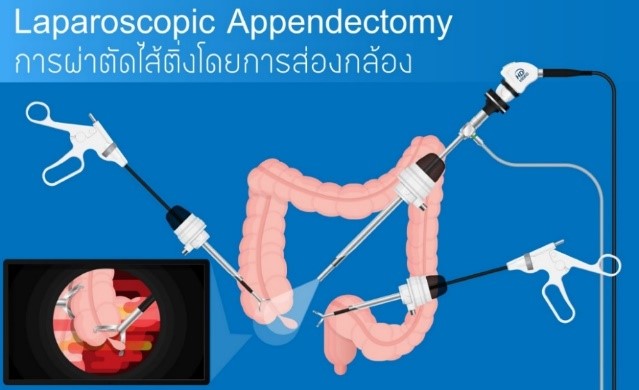
Laparoscopic Appendectomy Procedure.
Recovery Time
Without complications, patients typically stay in the hospital for 2-3 days. Light daily activities can be resumed shortly after, with a full return to normal activities usually within 1 week.
Related Packages
ผ่าตัดนิ่วในถุงน้ำดี แบบส่องกล้อง
แผลเล็กเจ็บน้อย ฟื้นตัวเร็ว ลดภาวะแทรกซ้อน
Men's Sexual Health Restoration
No pills, no supplements—Treat and restore performance with FSWT.