Common Misconceptions About Eye Diseases
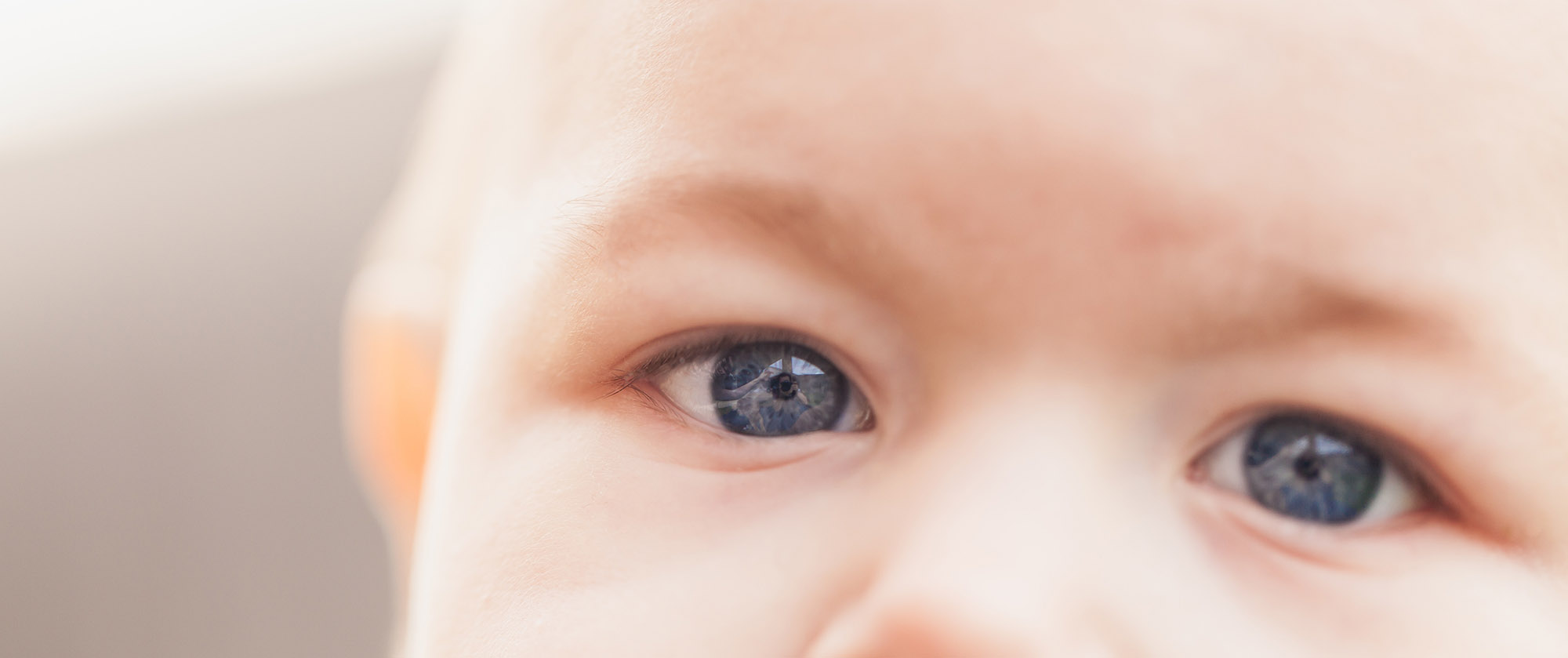
Did you know that many traditional beliefs and stories passed down through generations are often far from the truth? Some have even become superstitions lacking any logical basis.
When these misconceptions are put into practice, they can lead to life-threatening complications. In medicine, we encounter numerous false beliefs. For instance, some believe a sick child should only eat rice and salt while avoiding meat and vegetables, leading to severe malnutrition, blindness, or even death. Similarly, some eye surgery patients avoid all food except sticky rice after returning home, which slows down wound healing and, in some cases, causes surgical wounds to reopen.
Today, we will address common misconceptions regarding eye health that need to be corrected and properly understood:
Misconception:
Parents often neglect their young children's eye problems, waiting until they are older to visit an ophthalmologist. They believe, "The child is too young to cooperate, their eyes are so tiny—how can a doctor see anything?" or "A young child wouldn't have a serious eye disease."
The Truth:
Just as no one is ever too old to learn, no patient is ever too young for a doctor. If that weren't true, pediatricians wouldn't be able to treat infants. In ophthalmology, even with a newborn:
"An ophthalmologist can perform an examination because the eye is an organ with transparent media, allowing light from diagnostic instruments to pass through to the retina and optic nerve for us to see clearly."
Regarding vision measurement in young children, we can determine nearsightedness, farsightedness, or astigmatism without the child needing to be able to read numbers or letters.
Therefore, if a child displays behaviors suggesting poor vision—such as holding objects unusually close or frequently bumping into things—it may not just be a refractive error; it could be an internal abnormality, such as pediatric eye cancer.
The belief that young children do not have serious eye diseases is dangerously incorrect.
Misconception:
A child with crossed eyes (strabismus) will naturally outgrow it as they get older.
The Truth:
This is only partially true for a very small group. Some children have eyes that turn inward because of severe farsightedness. If the farsightedness decreases as the child grows, the crossing may lessen.
However, this is rare. Leaving strabismus untreated for too long can lead to permanent vision loss (amblyopia or "lazy eye"). More critically, if the eye is crossing because of a tumor inside the eye, it could be fatal.
If your child has crossed eyes, do not sit idly by hoping it will straighten itself. You should consult an ophthalmologist early. Correction may involve glasses, eye exercises, or surgery.
Misconception:
Cataracts can be cured with oral medication or eye drops.
The Truth:
A cataract is the clouding of the lens inside the eye. The only effective treatment is surgical removal or ultrasound phacoemulsification. Eye drops may help slightly in very mild cases.
For most patients, the only solution is to have an ophthalmologist remove the cataract and replace it with an artificial intraocular lens.
Many patients, out of fear of surgery, waste time buying unproven eye drops from pharmacies. This allows the cataract to progress into glaucoma, eventually leading to permanent blindness. It is a tragedy to lose one's sight due to such a belief.
Misconception:
"I'm 50 and can now read without glasses, whereas I needed them 10 years ago. My eye health must be improving with age!"
The Truth:
Individuals over 40 usually experience presbyopia, which requires convex lenses (reading glasses). Those who can read without glasses at this age usually were nearsighted to begin with.
If someone who previously needed reading glasses suddenly finds they can read without them at age 50, it doesn't mean their health is improving. It means their vision is becoming more nearsighted, which is a classic early sign of a developing cataract.
This "second sight" is a reason to see an ophthalmologist, as it is often the first symptom of cataracts.
Misconception:
"As long as my vision is clear and my eyes don't hurt, I don't have any eye diseases and don't need a check-up."
The Truth:
We often find highly educated patients in high-ranking positions with glaucoma so advanced they have nearly lost their sight. We are unsure if they were too busy or if they held this misconception.
This belief is entirely false. Early-stage chronic glaucoma shows no symptoms whatsoever—no pain, no irritation. Only an eye pressure test by a specialist can detect it. By the time your vision actually becomes blurry, the disease has already destroyed a significant portion of the optic nerve.
We recommend an annual eye pressure test, especially for those aged 35 and older or those with a family history of glaucoma.
Misconception:
"If my vision is blurry, I just need a good pair of glasses to see clearly again."
The Truth:
Most people with blurry vision head straight to an optical shop to find glasses instead of visiting a hospital. They should first determine if the blurriness is caused by a refractive error or a disease.
Simply getting glasses may seem to solve the problem because vision will improve. However, if that person has both nearsightedness and an underlying disease like glaucoma, the glasses will mask the disease.
An optician is not a doctor. If the patient is satisfied that the glasses make things clearer, they may completely overlook a silent disease like glaucoma until it's too late.
Misconception:
"It is natural for the elderly to have dim and blurry vision; it's just a part of aging."
The Truth:
This belief causes many elderly people to go blind unnecessarily. While it's true that vision may change with age, significant blurring always has a specific cause—whether it's glaucoma, cataracts, macular degeneration, or a change in refractive error.
Vision loss should not be dismissed as "old age." Consult an ophthalmologist, as many of these conditions, such as cataracts, are completely curable.
Misconception:
"My eye drops worked for me, so I should share them with my friends or family who have eye problems. Eye diseases are all the same anyway."
The Truth:
Eye diseases vary greatly, and their treatments are specific. Unlike a general headache, eye medications are not "one size fits all." Sharing prescription eye drops can be dangerous and lead to blindness.
For example, giving drops meant for iris inflammation to someone with undiagnosed glaucoma can cause a severe pressure spike and lead to permanent blindness. Never share eye medication; recommend a visit to a specialist instead.
Misconception:
Refractive errors like nearsightedness can be cured with exercise or supplements. Wearing glasses only makes you "addicted" to them and makes your eyes worse.
The Truth:
Refractive errors are corrected with glasses, contact lenses, or LASIK. Supplements do not help because nearsightedness is not a "disease"—it's a variation in the eye's physical measurements, much like being tall, short, or having a certain skin tone.
When glasses make your vision much clearer, you naturally prefer wearing them. If your vision changes over time and the glasses become blurry, it's due to natural changes in your eye, not the glasses themselves.
Your eyes change with age regardless of whether you wear glasses. People who don't wear glasses simply don't notice the gradual decline as much because their baseline vision was already blurry.