Diabetes and Eye Complications

Eye Complications from Diabetes
- Frequent changes in vision caused by fluctuating blood sugar levels.
- Cataracts develop earlier and progress faster than typical age-related cataracts.
- Glaucoma is found in diabetic patients four times more often than in the general population.
- Diabetic Retinopathy causes the retina to swell or bleed, leading to vision loss. In some cases, severe neovascular glaucoma may follow, or fibrous tissue may pull on the retina, causing retinal tears and detachment.
- Optic nerve swelling (Papilledema) due to lack of blood supply, resulting in blurred vision and a narrowed visual field.
- Retinal Vein Occlusion (RVO), which can lead to blindness and secondary glaucoma complications.
- Orbital infections, which can cause bulging eyes (proptosis) and permanent blindness.
“Beware of Diabetic Retinopathy! It can lead to permanent blindness.”
Risk Factors for Diabetic Retinopathy
- Duration of diabetes: If you have had diabetes for more than 5 years, it may begin to affect your eyes. After 20 years, 100% of patients will likely have some degree of retinopathy.
- Poor blood sugar control: Patients with inconsistent sugar levels are at a much higher risk than those with stable control.
- Comorbidities: Having other conditions such as hypertension, high cholesterol (dyslipidemia), and kidney disease.
- Pregnancy: Being pregnant can accelerate the progression of diabetic eye disease.
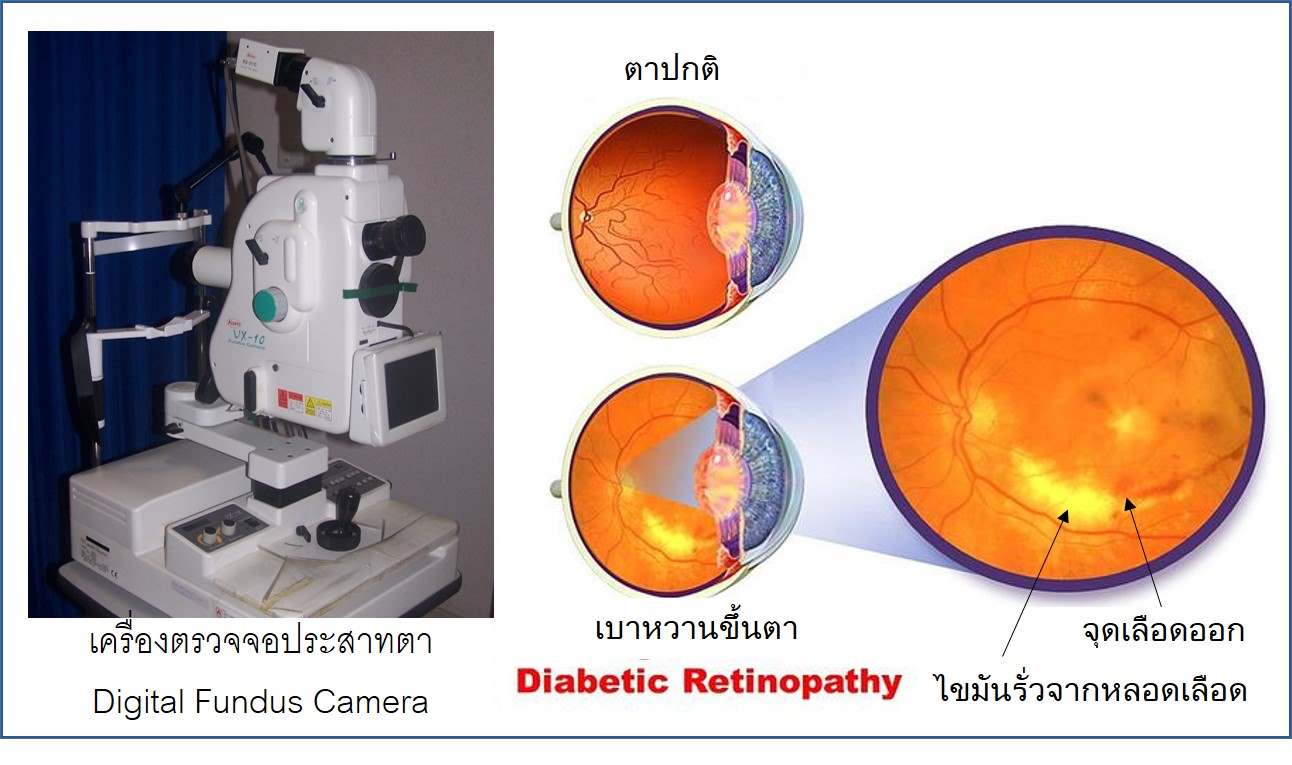
Retinal examination using a Digital Fundus Camera
“Diabetic eye conditions can be diagnosed and treated more effectively with modern medical equipment. Therefore, every diabetic patient should receive an eye examination by an ophthalmologist at least once a year.”
Symptoms and Treatment
- Non-proliferative Stage (Mild): If vision is not yet blurred, follow up with an ophthalmologist every 6 months. If vision becomes blurred due to macular edema, treatments include steroid injections, anti-VEGF (Bevacizumab) injections, or laser therapy.
- Proliferative Stage (Severe): Characterized by one or more of the following:
- Vitreous hemorrhage: Seeing red spots or floaters due to bleeding from newly formed abnormal blood vessels.
- Fibrosis: Fibrous tissue pulling on the retina, which may cause retinal holes or tears.
- Retinal detachment.
"If symptoms in points 2 and 3 occur, a Vitrectomy (surgery to change the vitreous fluid), fibrosis removal, and laser therapy are required."
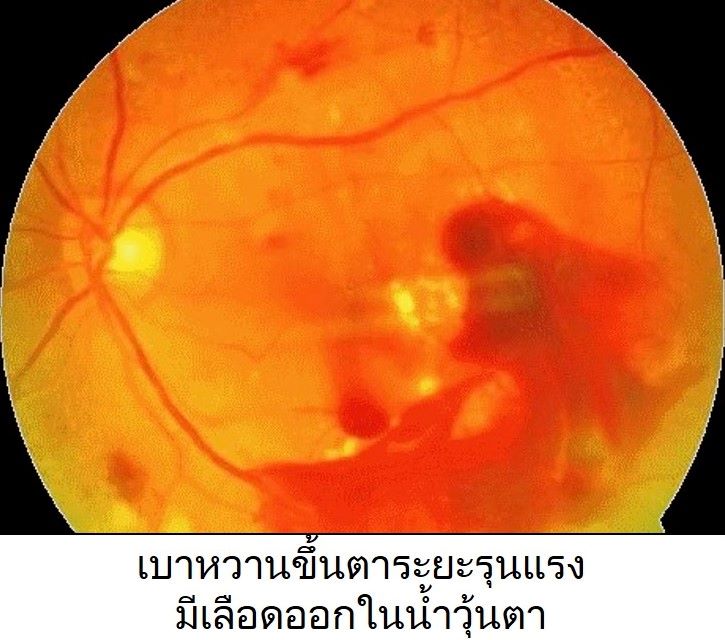
Treating diabetic retinopathy in its early stages yields much better results than waiting until it is advanced. Patients must be committed, patient, and strictly follow all medical appointments.




Related Packages
Call us